Monday, 7 February, 2011

6 objectives for public service digital engagement

One thing that really came out of the social media strategy seminar we ran last week was that it’s vital for an organisation to have a decent handle on just why they want to be doing this stuff.

I think we’ve reached the point now where most organisations understand the power and reach of emerging social technology, and get the fact that they ought to be involved.

For an approach to be truly successful though, you have to have some objectives in mind. It’s not enough to just do – knowing what you’re doing and why is just as important!

Another thing to consider is what it is that you want those you digitally engage with to actually do. It’s great having thousands of people liking your Facebook page, or loads of Twitter followers… but what are you going to do with them?

Here are some of the more obvious objectives for an organisation to be involved in the social web.

1. Engagement

Lots of people have their own definition of engagement, but just for the purposes of this post, I am talking about a more engaging method of communicating with the public.

I’ve written previously that social media activity doesn’t belong exclusively to communicators, but there is no doubt that there are real opportunities to improve the way organisations communicate using the web.

So using online channels to make people aware of the good work your organisation is doing is a perfectly valid objective – I’d just argue it shouldn’t be the only one!

A great example of this would be Coventry City Council‘s use of Facebook.

2. Open innovation

Perhaps a more interesting use of social technology is in increasing the pool of people contributing ideas and solutions to problems and the improvement of services.

Open innovation differs from traditional approaches by opening up the innovation process beyond the walls of the organisation.

The web provides a great platform for encouraging people to share problems and for groups to work together on solutions.

There are a couple of potentially great examples emerging in this space – DotGovLabs, which is currently an invite only platform, but which will be opening up a bit more in the future; and FutureGov‘s Simpl, which combines open innovation principles with an online marketplace.

3. Participation

The web provides a great opportunity to get more people involved. Too many participation processes in public services involve people being in the right place at the right time, and completely fail to fit in with the way people’s lives tend to work these days.

Using the web as a platform for participation makes it possible for lots more people to get involved. All those who don’t have the time to spare for a 2 hour meeting in the evening may well have 15 minutes spare when they are sat near their computers to contribute.

One great use of social tech to increase participation that I have come across recently is South Yorkshire Police who run their community meetings online in parallel with the offline traditional meeting with virtual attendees outnumbering those who turn up in person.

4. Collaboration

More and more, organisations involved in the delivery of public services are having to work together to ensure the best service is provided for the best value. This means sharing information and having effective means of communication -stuff which the social web was made for.

Too many public service partnerships are run on the basis of meetings, which are often monthly or even quarterly, and where too few people are able to get involved. Using an online platform to provide a space for discussions, online meetings and document sharing and collaboration makes total sense.

An illustration of this is action is the Essex Vine project, where Learning Pool provided a common platform for the Human Resources partnership in the county, and where common learning resources are shared by all, including a management training programme. Find out more here.

5. Crowdsourcing

Corwdsourcing is similar to open innovation, in fact it’s probably a type of open innovation. It focuses on spreading the net as widely as possibly in search of ideas.

Often this takes the form of competitions, where cash or other resources are provided to winning ideas to develop prototypes.

Two great instances of this are Kent and Medway’s Transformed by You project, and the open data competitions run by Warwickshire County Council.

6. Knowledge sharing

Number six focuses on the cross sector need for organisations involved in the delivery of public services to share experience and lessons learned amongst one another. Again, a key thing here is efficiency and making the most of scarce resources: if one council has been through a process, they really need to share what went well and what went wrong with others before they embark on a similar project.

Social tools make this really easy, and the outstanding example of this is the Communities of Practice platform, operated by LGID.

Any more?

There’s six from me. Disagree with any? Let me know in the comments, or add some of your own!

Permalink6 objectives for public service digital engagement

Sunday, 6 February, 2011

Radical transparency in local government – what can you do?

Something like Wikileaks couldn’t happen in local government, could it?

Watching LCC

Well, it looks like something similar is kicking off in Lincolnshire, with the Watching Lincolnshire County Council blog.

It’s a whistleblowing site, where disgruntled employees are sharing rumours, gossip and occasionally confidential details, all anonymously. Collective Responsibility have an interview with those behind it.

Whether or not this is the right thing for those behind the site to do is a moot point. The real issue is that the internet makes this kind of activity easy to do, and very difficult to stop.

All organisations need to be aware of the fact that any of their employees at any time could start something similar. And no matter how sophisticated your information management systems and processes, the fact that it’s human beings behind the controls means that any data can find its way into the public domain quickly and easily.

What can you do about it? First of all, acknowledge your lack of control here. You can’t stop this from happening. All you can do is to try and prevent the situation arising where employees might want to do this.

That means: be open in your communication, and involve and engage staff in any large scale change programme that might be taking place. Examples such as Watching LCC show that staff are increasingly willing to go to the internet to share their concerns – other instances include the setting up of Facebook groups to support staff in similar circumstances.

One way to prevent this is to provide a similar area for discussion within the organisation, such as simple discussion forums, or with tools like Yammer. Ensure staff trust the space, don’t manage it, and hopefully they will prefer to air their issues internally rather than in a public space.

There’s an assumption that face to face communications are always best. That may be true, but the problem is that they don’t scale well. As soon as you are dealing with groups larger than say 25, the intimacy is lost and there are better ways of dealing with it.

I remember being involved in an organisation-wide restructure when working in local government, and most of the communications involved hundreds of people trooping into the council chamber to hear the chief executive tell us what was going to happen to us. There was an opportunity to ask questions, in front of everyone. Unsurprisingly, not many people bothered.

Discussing issues openly and in a trusted online environment won’t be a panacea for employee engagement during times of significant change. But it might mitigate against the risk of staff going elsewhere to have these conversations.

Has anyone else heard of any public sector staff rebellions, using the web? Are any of your organisations actively managing the issue – and is it in a positive, constructive way, or a negative, let’s-shut-it-down way? The latter, of course, is bound to fail.

PermalinkRadical transparency in local government – what can you do?

Friday, 4 February, 2011

Free webinar on how technology can support public sector collaboration

I’m hosting free webinar, thanks to Learning Pool, that will take you through the benefits that technology can bring to collaboration within public services.

Covering the main tools and the strategies to implement them, attendees will be able to identify the right solutions to enable them to manage change, talent, knowledge and learning within their organisations.

It’s happening on Wednesday 9th February, between 10 and 11am.

Sign up here.

The webinar runs on GotoWebinar so you might want to check that you have access – you’ll need sound as well (unless you’d rather not listen to me, and provide your own soundtrack).

PermalinkFree webinar on how technology can support public sector collaboration

Thursday, 3 February, 2011

Learning, knowledge and the ‘net

I had the pleasure earlier today to speak at a meeting of the Scottish Knowledge Management Network (link requires sign-in) in Aberdeen, hosted by the very generous SubSea7.

My slides are embedded below. If you can’t see them, there’s a PDF here.

My main points were:

  • The internet has knowledge sharing and learning in its DNA. Any approach to knowledge management that doesn’t involve the ‘net deserves to fail
  • People share and learn in their own ways. Give them the freedom to find the tools and techniques that work for them, and ensure the organisation can aggregate
  • Turning activity like recording and sharing knowledge into a standard corporate process is unlikely to make it popular. Fit it into everyday workflow, not extra work
PermalinkLearning, knowledge and the ‘net

Social media strategy seminar roundup

Photo by @bredadoherty

The seminar yesterday in Edinburgh went pretty well, I think. We had a great turnout – about 30 people – which was surprising as we were only expecting 25, and meant we had to find some extra room. Luckily the staff at COSLA were very accommodating!

Thanks also to Mike and the team at the Improvement Service for their help in laying on the seminar.

The session was run on the lines of going through the stages of a social media strategy, with me doing some introductory words, then groups discussing the issues, and then filling in the relevant section of their workbook, and some feedback. Rinse and repeat for each section…

Here are the slides I used. The most useful bits are probably the questions to consider when completing that bit of the strategy.

If you can’t see the embed above, then here’s a PDF copy to download.

Here’s the workbook.

Here’s a Word version if you’d like one you can edit and play around with.

Would anyone else be interested in attending a session like this? Let me know!

PermalinkSocial media strategy seminar roundup

Tuesday, 1 February, 2011

Nothing’s really new…

A quick post as I am preparing my slides for the knowledge management talk I’m delivering on Thursday.

In the slides, one of the key points is that the internet from the very beginning was designed as a tool for recording and sharing knowledge. I get to cover some of my favourite ground, talking about amazing people like Vannevar Bush, Doug Englebart, Ted Nelson and of course Tim Berners-Lee.

One thing I haven’t been able to squeeze in, but a story I love, is that of the Community Memory project.

I may as well just steal the text from Wikipedia:

Community Memory was the first public computerized bulletin board system. Established in 1973 in Berkeley, California, it used an SDS 940 timesharing system in San Francisco connected via a 110 baud link to a teletype at a record store in Berkeley to let users enter and retrieve messages.

While initially conceived as an information and resource sharing network linking a variety of counter-cultural economic, educational, and social organizations with each other and the public, Community Memory was soon generalized to be an information flea market. Once the system became available, the users demonstrated that it was a general communications medium that could be used for art, literature, journalism, commerce, and social chatter.

It other words, it used a terminal in a record shop, attached to a big mainframe miles away. It brought computing power to people who would never normally go near it. It was leapt upon by people, who used it to share information, buy and sell stuff, talk to other people.

Sounds a bit hyperlocal to me.

PermalinkNothing’s really new…

More travels, more talking

After this week’s exciting trip to Scotland, I’m venturing slightly less far north a couple of weeks afterwards, to Lancaster.

It’s for the ‘Digital networking and community safety partnerships conference’, taking place at the town hall in Lancaster on 16th February. It’s a joint LGID and NPIA event, and features really interesting discussions about how digital engagement can be used to make partnership working more effective, and to actually help change behaviour.

I’ll do a quick introduction to the subject at the beginning of the day, and will hang around to answer questions and help out where I can.

Here’s the blurb from the site:

Bringing together the worlds of community safety and digital networking, this free one-day event organised by LG Improvement and Development, the National Policing Improvement Agency and Lancaster City Council aims to provide an overview of social networking, social media and digital networking, their use generally and how they are being used within community safety and policing.

The event will include sessions on:

  • the policy landscape for digital engagement in community safety
  • what digital engagement is and how to use it
  • community use of digital engagement.

If you are interested in attending this free event, just email Rachel Duke by 9th Feb.

Incidentally, I’m probably going to be driving up to Lancaster on the 15th. If you’re on my route, let me know and maybe we can arrange a meet up at a motorway service station, or perhaps something less seedy.

PermalinkMore travels, more talking

A brief tour of Scotland…

I’m looking forward to my quick tour of Scotland this week, visiting Edinburgh tomorrow, to deliver a seminar on social media strategy for public services; and then Aberdeen to talk to the Scottish Knowledge Management Network about how technology makes sharing and storing knowledge a wonderful thing.

Both these events are in partnership with the Improvement Service.

Social media strategy

The seminar tomorrow is going to be quite interesting, as it is the first of its kind that I have delivered, and so it might be worth covering in a bit more detail.

As Joanne Jacobs expressed very eloquently in this post, strategy is vital for an organisation wanting to get digital engagement right. I’ve tried to design this seminar around the process of writing a strategy.

So, the agenda looks a bit like this:

  1. Background
  2. Objectives
  3. Implementation
  4. Evaluation
  5. Risk management
  6. Operational guidance

Each section will feature a short presentation from me, introducing the topic, and then a discussion on tables. Then all the delegates fill in the relevant section of the workbook we have created for them, with a page for each section, where notes can be jotted down.

Then after the event all delegates will be sent an electronic version of the workbook so they can type it all up, make any changes to the format they want to and that kind of thing, so that – wahey! – they have a draft strategy ready to go.

I’ll share the slides and workbook on this blog – assuming the seminar works! – next week.

I’m interested in making this seminar available to others as well, which could take the form of running more face to face sessions, for which a charge may well be necessary; or online as a webinar, which is likely to be free.

I’d appreciate any feedback on which of these people might prefer!

PermalinkA brief tour of Scotland…

Monday, 31 January, 2011

Introducing My Learning Pool – e-learning for everyone

Today we are delighted to launch our newest product – My Learning Pool – which is one of the most exciting things we have ever done!

My Learning Pool is a suite of online learning resources which can be bought and used by anybody.

Here’s a slidedeck that explains things a bit more – if you can’t see it, here’s a PDF version (opens in new window).

Whether you are some who is about to have a change in career, or a volunteer with a local community group, or the person in charge of an organisation – My Learning Pool provides all the training you need, when you need it, where you need it.

What’s more, all this lovely learning is available at a price that is jaw-droppingly good value – exactly what the civic sector, for example, needs right now.

No more giving up a whole day to travel to attend a training session, or spending hundreds of pounds getting the basic knowledge you need to be able to contribute to your full potential.

There are over 20 courses available in My Learning Pool at launch, and we will be adding to them all the time. They cover vital topics for individuals, such as:

  • using social media
  • finding a new job
  • presentation skills
  • personal health and safety

For those looking for a cost effective solution to providing training for your organisation, My Learning Pool also fits the bill, with modules on subjects like:

  • procurement
  • customer service
  • technology and change
  • managing stress
  • data protection

So if your organisation needs to get all its volunteers trained in say customer service, or heath and safety, My Learning Pool can ensure you do so in a cost effective manner.

So, how much does My Learning Pool cost? For a year’s access to all the courses, the price is a mere £25 per person.

Yup. Twenty-five quid.

As we add more courses through the year, you get those as part of your subscription, too.

You can buy it for yourself right now, by visiting the web site and signing up with your credit card.

If you want to bulk buy for your organisation, there are discounts available – check them out.

For anyone looking to brush up some of their skills, or for organisations that need the peace of mind that their people are getting the vital training they need, My Learning Pool fits the bill.

For more information, email hello@mylearningpool.com or follow us on Twitter @mylearningpool.

PermalinkIntroducing My Learning Pool – e-learning for everyone

Friday, 28 January, 2011

If place is a system, let’s make it an open source one

This is a post that has been brewing for a long while, so sorry if it smells a bit. The basic concept hit me during FutureGov‘s excellent CityCamp London event, and keeps reoccurring as I have chats with people and read stuff online.

It’s not a post about technology, really, but rather taking some of the lessons learned from technology and seeing how it can be applied to everyday public services.

The way I see it is this – places, whether cities, towns, villages, or larger areas like districts, counties or regions, can be seen as systems. They have a number of different sectors and organisations working within them, all of which have their own distinct processes, but all of which also interact with one another all the time.

When you think about it, it’s amazing that the system works as well as it does most of the time. These are complicated beasts.

So what about this open source business? Well, whilst in theory anyone can contribute code to an open source project, in general, not many people actually do. Instead, development is handled by a small core group, and most people’s effort is put into testing software and submitting bug reports.

This is the role I think citizens can play in redesigning local services – not necessarily producing solutions, but spotting the issues, the bugs, and reporting them. As Eric Raymond wrote in his seminal work on open source development, the Cathedral and the Bazaar, identifying problems is the hard bit, the bit where you need ‘many eyeballs’ – solving them should be straightforward for those that understand the system.

That’s not to say that citizens shouldn’t be involved in contributing ideas for improvements, but it shouldn’t be their only contribution. I suspect this is the reason why the success of ideation competitions across the world has been variable, as Andrea Di Maio has noted on several occasions.

A key part of the bug tracking process, though, is visibility, and this is what our public services lack right now as part of the feedback mechanism.

The bugs people identify are published on the web, categorised and tagged so they can easily be found. Other people try to recreate the bugs so they can be further tested. People suggest possible solutions, which the core development team may or may not take on board.

For place to work effectively as an open source system, then, we need an open, public repository of bugs that anybody can access.

After all, there are very few areas of service delivery that just one organisation has ownership of. Take anti-social behaviour – it’s a police matter, sure, but also a health one, an education one, a social services one. There are probably some community and voluntary organisations that have an interest too.

Any one of those services might have an easy solution to a problem, but if they don’t know about it because it was reported to someone else, then nothing is going to happen.

Likewise when people are submitting issues, or bugs, they don’t necessarily care which service they should be reporting it to. Which tier of local government? Is it a police matter? We shouldn’t force people to understand our hierarchies and structures just because they want to point something out that is going wrong.

Some people might be crying out ‘FixMyStreet!’ at this stage, and that site does go a certain way to answer some of the issues I’ve written about. But there are a couple of key differences. The first is the nature and tone of FMS, which the name makes clear. ‘Fix my street!’ yells the citizen. Maybe we should turn that around, and make it ‘How can I help you to fix my street?’ might be a more positive exchange.

Not only that, but while FMS provides a space for public responses to issues from the council, it doesn’t make the process of producing a solution an open one. It doesn’t open the conversation up to the other actors in a place, it doesn’t enable citizens themselves to contribute to the solution – whether through their ideas or actually physically doing something.

Here’s another example. Maybe someone reports a bug in the local public transport arrangements, getting from a village into the local town – there isn’t a bus early enough to get them to work. They could report the bug straight into the local council, in which case it would probably end up being pushed to the transport operator. But this misses the opportunity for perhaps a local private car hire firm to step into the breach, or indeed for a local resident to offer a lift. In the latter case, sometimes a problem in the system doesn’t need a system wide fix.

There are a number of challenges to open sourcing a place like this. A major one is the way that partnerships work at the moment, which can be incredibly slow moving, bureaucratic and not terribly collaborative. A more enlightened approach will be necessary – although in this age of public sector austerity, such an attitude is likely to be required anyway.

There is some tech required – the best place for the bug tracker is online, but throwing something together in WordPress or Drupal shouldn’t take anyone who knows what they are doing too long at all.

So this concept I think starts to tie together some of my thinking around coproduction, crowdsourcing, open source and my more recent outpourings on innovation and creative collaboration.

I’d be really interested in people’s thoughts. Please spot the bugs in what I’ve written!

Whilst the half baked thinking in this post is entirely mine, the bug tracker idea was originally blogged about by Tim Davies a few years ago; and the importance of visibility was made clear to me in a conversation with Nick Booth.

PermalinkIf place is a system, let’s make it an open source one

Thursday, 27 January, 2011

If not skunkworks, then maybe creative collaborations?

C4CC Launch

On my recent two posts on bringing the idea of skunkworks to local government, several people made the extremely reasonable point that I probably wasn’t really talking about skunkworks at all.

Steph said in the comments:

…it seems to me that we’re at risk of hanging more onto the ‘skunkworks’ peg than it’s fair to ask it to carry. To me, skunkworks is about a team delivering a tangible technical output quickly and creatively because they’ve been relieved, to a great extent, of bureaucracy and management.

I hold my hands up to this!

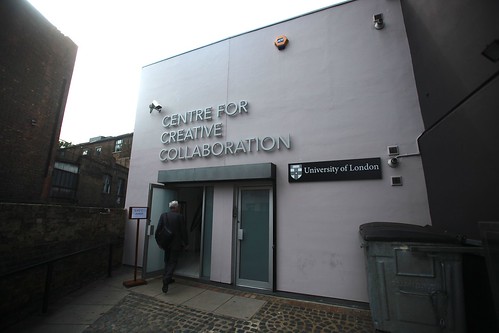
My time spent with Lloyd on Saturday reminded me of the really interesting work he is doing with Brian Condon and others at the Centre for Creative Collaboration in Kings Cross.

Perhaps this is a better model than a skunkworks for helping local councils improve and innovate?

Creative collaboration is all about the idea that if you put interesting people in a room together, magic starts to happen. We saw that in abundance on Saturday at GovCamp.

As the site for the Centre says, it is:

A neutral place where people from many different backgrounds – universities, large corporates, SMEs, freelancers – can work together on new things in the belief that real innovation happens at the edge and in the gaps between disciplines.

I suspect this is the sort of thing I was thinking about. I think there are two elements here for councils – the purely internal, and then opening up a bit to outside ideas.

Firstly, perhaps a local authority should have its own ‘centre for creative collaboration’ where innovative, idea-laden people work together, no matter what their role or duties. In other words, allow the networkers, the collaborators and the innovators to leave their desks and put them next to each other to create wonderful things.

This isn’t the same as a skunkworks, because these guys are still doing their day jobs – just in a different environment, where connections and collaborations can flourish, organisational boundaries be leapt over and ideas generated.

The second stage is then to open the conversation up to others, probably in a neutral space, rather than in a council building. Maybe this is something that empty shops on high streets could be used for? Just arrange Tuttle or Jelly like meetups, allowing people to hang out and talk about their work and ideas. Start off informally and see where the conversations and ideas go.

If similar initiatives are happening in places across the country, then sharing experience should be fairly easy to do through online networks.

I’d be interested in people’s thoughts!

Photo credit: Benjamin Ellis.

PermalinkIf not skunkworks, then maybe creative collaborations?

Wednesday, 26 January, 2011

GovBlogging

Ingrid Koehler led a really interesting session at the weekend’s GovCamp about blogging in the public sector and how it might be supported and promoted (the session later went on to cover the excellent LGovSM twitter chats that happen on a Friday afternoon, convened by Louise, who also blogs).

One great contribution was from David Allen Green who blogs for the New Statesman as well as his own, extremely popular, Jack of Kent blog. He gave some great tips on writing engaging content, including keeping sentences and paragraphs short, and ensuring you are actively contributing to the topic under discussion, rather than just repeating others or trotting out opinions – advice I’d probably do well to heed.

Carl Haggerty – one of the best govbloggers we have – also contributed with some great thoughts on the use of blogging as a personal learning and knowledge tool.

Ingrid followed up with a great post on her blog:

It’s personal reflection. I’ve worked out a lot of things through blogging, the process itself has often help me achieved clarity. But other things that are great about blogging are community aspects – feedback, additional information, learning new things, reality checks and correction. And for that you need an audience, but not a big one. And many people (like me) find that having an audience provides some stimulus to keep doing it. But again, it’s not about big numbers.

It’s funny, because a very similar sessions ran last last year’s GovCamp, only it was a lot smaller. Clearly Pubstrat and I just don’t have the same appeal! Last year’s session was inspired in part by a post I had written on the topic:

…people blogging is important, and a Good Thing. There are a number of reasons I think this way – mainly that blogging is a great way to develop and share ideas, to create a movement, to develop a reputation. A healthy and active blogging community in a sector means that it’s a sector where there is a lot of creativity. It means that sector is an interesting place to be.

What’s changed in a year? I’d say that govblogging is growing. Public Sector Bloggers is being populated by more blogs than ever – to the point where there’s now almost too much stuff (see later on for thoughts on that).

Another important change is the use of the common blogging platform on the Communities of Practice. Predominantly a local government space, for the first few years of the platforms life, the blogs were pretty much ignored. Now lots of people are using them to share ideas, knowledge and experience.

These blogs, as well as being plentiful in terms of the number of posts they produce, are also well engaged with, and when I remember to copy-and-paste content across there from DavePress I find I usually get plenty of comments, which is great. It also provides a reasonably safe environment for those new to blogging, of course.

However, the Communities of Practice remains a fairly closed platform, and the fact that you have to remember to log in and check for stuff means it’s always going to lack a bit attention-wise. This should be fixed in the up and coming Knowledge Hub, which promises to be more open – where users choose it to be – and it will be easier for those of us with existing blogs to import our content automatically rather than having to copy and paste it as we do now.

I’m keen, and I know others are too, to support the use of blogging within public services. There is still a joy to be had in publishing, especially when you start to gain a readership and people interacting with what you write.

So what could be done to encourage others to get involved? I’m keen to see Public Sector Bloggers play a role here. We’ve added more and more feeds to it, and while it is by no means comprehensive, it’s also getting rather unwieldy. Some kind of categorisation is needed, I think.

I also suspect that it isn’t that well known. The FeedBurner stats show that 125 people subscribe to the RSS feed, with 24 subscribing via email. The Twitter feed has 785 followers, which isn’t too bad. I don’t think we have Google Analytics installed, so I’m not sure what the direct visitor numbers are like.

What could we do with Public Sector Bloggers to help encourage more blogging in the sector? Here are some ideas – I’d welcome yours, and any feedback too.

1. A source of guidance on blogging for public servants

There lots of stuff out there (including this rather outdated guide by me) and it should be too hard to pull together the whats, whens, hows, whys and wherefores of good public sector blogging, and to publish them on the site. Maybe it could be cobbled together to form an e-book.

2. A blogging platform

I’m not convinced this would help much given how easy it is to sign up for your own blog on WordPress, Blogger, Posterous or Tumblr (maybe there are too many options!). It might however take away some of the pressure people feel about having to post regularly to their blog, if they are contributing to one big one with lots of other authors?

3. Some kind of event

A PubSecBlogCamp? Or perhaps something more formal and workshoppy for those new too it. But would people give up time to talk about blogging in the public sector? Maybe not 200 of them, but perhaps a handful would…

4. Blogger mentoring

How about some kind of blogger mentoring, where a newbie blogger is introduced to a veteran, who can provide ongoing advice and guidance on posting, writing style and that kind of thing?

5. Better aggregation

This one is a definite I think. We need to go through the list, cull the blogs that aren’t updated any more and add some of those that are missing. Some kind of categorisation would be useful, whether in terms of the parts of the sector the blogs are written about or the themes they cover. Maybe a common search engine across them all to make finding content a lot easier.

As I said above, I’d be glad to hear your thoughts on these ideas and any you might have yourself!

PermalinkGovBlogging

Tuesday, 25 January, 2011

Building an innovation culture

One of the best blogs I read regularly on innovation is 100% Open. The latest post there is a pretty interesting one on building an innovation culture.

The tips are:

  1. Focus on fostering a viral innovation culture one person/team at a time
  2. Build innovation habits
  3. Institutionalise what innovation looks like
  4. Give mavericks & their networks permission to innovate
  5. Celebrate benefits of creative-thinking, risk-taking & mistake making in personal and professional lives
  6. Incentivise inner motivation as much as financial or professional rewards
  7. Give innovation (a) space & bring it to life

Read the whole post for a description of each one.

Not sure I would agree with them all – number 3 gives me the willies – but certainly food for thought!

Any you would add, or question?

PermalinkBuilding an innovation culture

Monday, 24 January, 2011

Bookmarks for January 10th through January 24th

I find this stuff so that you don’t have to.

You can find all my bookmarks on Delicious. There is also even more stuff on my shared Google Reader page.

You can also see all the videos I think are worth watching at my video scrapbook.

PermalinkBookmarks for January 10th through January 24th

That was the #ukgc11 that was

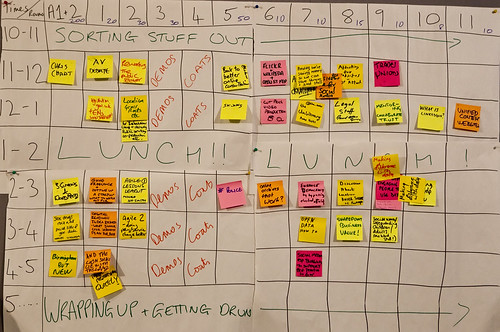
Govcamp agenda

GovCamp this Saturday was a delight, thanks to the wonderful people who attended, those that helped out, and the good folk at Microsoft who looked after us all so well.

This year there has been so much written online that I don’t know what else I can add! The easiest place to go for content is GovCamp buzz – as well as Twitter, Delicious and Flickr.

Don’t forget to also look at the lovely collection of content that Lloyd Davis (the event’s facilitator in chief) is curating over here.

Helpful, with hooter

All I can think to do is to thank Steph for being such an awesome person to work with on this. His ability to get stuff done, and to understand things which involve numbers and money, meant that, despite the scale of this year’s event, it was no more disorganised than usual.

His willingness for me to take all the limelight to satisfy my cravings for attention is also much appreciated.

Thanks, mate.

Both photos by the magnificent Paul Clarke.

PermalinkThat was the #ukgc11 that was

Thursday, 20 January, 2011

Participation, and participating

Recently I’ve been thinking a fair bit about the ‘participation deficit’ – the fact that too few people are contributing too much to society. It’s what informed my post about my view that we need more councillors.

No even half baked views or ideas yet, I’m afraid, though I’m mulling over whether to have a discussion session about this on Saturday’s GovCamp.

In discussion on Twitter about this, though, Anthony pointed me to an excellent (if lengthy!) slidedeck he has put together which includes stacks of interesting research.

Also relevant is his paper on how better engagement can save money for councils:

Democracy Pays White Paper
It strikes me, collecting these online resources and chatting online with people about issues, that we lack a decent platform to really discuss and collaborate on ideas like this. A sort of mixture between a research tool and a discussion platform.

What does it need?

  • The ability to clip, store and share articles, posts and documents like Evernote
  • The ability to easily share thoughts ideas and arguments blog-style
  • The ability to draw in discussions on other platforms, whether twitter, external blogs etc
  • To be able to comment on any of the above
  • A neat way of browsing through content and examine how it all relates to each other, similar to a mind map or Google’s wonder wheel

Does this already exist? Am not sure it does!

PermalinkParticipation, and participating

Wednesday, 19 January, 2011

Learning Pool talks Social Care e-learning in Manchester and London

Learning Pool Social Care briefingsIn the run-up to Wednesday’s publication of the health and social care bill David Cameron is discussing his plans to overhaul public services, including the NHS, today.

You can voice your thoughts on Cameron’s plans with other social care professionals by grabbing one of the few places remaining at our free expert-led Social Care briefings taking place in Manchester on 19 January 2011 and London on 20 January 2011.

>> Manchester Social Care Briefing, 19 January – Reserve here

>> London Social Care Briefing , 20 January – Reserve here

With the move towards refreshed Common Induction Standards planned for 10 June 2011 and against the background of ever changing public sector climate, you will learn from industry speakers and see how e-learning can achieve care provision whilst delivering significant efficiency savings.

For the Common Induction Standards, less than five months remain of transition window for social care practitioners to move from the old standards to the new before the old standards are removed.

From the Social Care Institute of Excellence (SCIE), will be Colin Paton who will introduce their work in the area of e-learning with the London delegates and share the results of research SCIE ran with Ipsos MORI into the e-readiness of the social care sector.

Warwickshire County Council’s Carol Judge, an expert on Safeguarding Adults and DoLS, will be discussing the changes that are on the horizon in these areas and also her experience in using e-learning as a way to reach out to GP’s.

Shedding light on social care in the 21st century will be Ophira’s Lyn Meaden. Lyn will be looking at the massive challenges ahead in adult care, from partnership working to efficiencies and how Learning Pool Social Care can help you tackle some of these.

Representing the third sector will be Alzheimer’s Society who will share their experience of the Dementia e-learning module that they worked on in partnership with SCIE. Wrapping up with the event will be an open table discussion when delegates will have the opportunity to ask speakers further about their areas of expertise and network with other delegates.

If you cannot attend Manchester or London, you can request the speakers’ presentations from the briefings here.

Plus, you can visit www.learningpool.com/socialcare to create a free account with your .gov.uk or .nhs.uk email address.  For a demo of  Learning Pool Social Care please email hello@learningpool.com

PermalinkLearning Pool talks Social Care e-learning in Manchester and London

Tuesday, 18 January, 2011

UKGovcamp: 5 days to go!

The biggest get-together of folk in the UK with an interest in how the public sector uses technology happens on Saturday, just 5 sleeps away. The list here says 204 people are coming, not counting our sponsors and hosts. Gulp. It’s just as well we have a proper grown up in charge of getting us all organised for the opening session.

Here’s a few things you might find useful in the meantime:

  • Stay tuned to the UKGovcamp site and jump into the UKGovcamp 2011 group or follow the #ukgc11 hashtag on Twitter where people are starting to talk about session ideas and more.
  • In terms of logistics: yes, there will be wifi and should be projectors in most rooms. Remember to bring a Mac->VGA adapter if you’re presenting from a MacBook, and people with spare 4-way extension leads are likely to be very popular.
  • The event registration opens from 9.15am, with kickoff at 10am, and will run until around 5pm. The venue again: Microsoft UK Customer Centre, Cardinal Place, 80 Victoria St, SW1E 5JL (that’s the entrance near Pizza Hut, not the one nearest Victoria Station)
  • The day itself will be run on ‘open space’ principles, without a pre-planned agenda etc etc. But given some of the people who’ll be there, we’re keeping one room aside this year as a ‘Demo Room’ with a bit more of a schedule. So for example, if you’d like to see Huddle in action, or kick the tyres of Delib’s CitizenSpace you’ll be able to go along at a predefined time and chat to the team behind those great apps. If you’d like to demo an app, it’s not too late – just drop me a line and we can get you on the running order for that room.
  • For years we’ve banged on about ‘but how do we get this stuff in front of the real decision-makers?’ To an extent, I’ve always tended to feel we should just get on with it for now, and those guys can catch up in their own time. But we’ve got a great bonus opportunity this year to showcase some of the ‘highlights’ from GovCamp to an invited audience of senior IT folk in government, at a smaller, separate follow-up soirée on a weekday evening hosted by Microsoft during February. So keep that in mind if you lead or participate in a great session on Saturday…
  • I’ve put together a quick aggregator for UKGovcamp stuff, and we’re hoping to be able to livestream the main room during the day for people who can’t be there in person. Fingers crossed on that one.

Finally, spare a thought and a click for our tremendous sponsors – 16 so far – who have really stepped it up a gear this year. The great news is that as well as having the normal Govcamp experience with t-shirts, nibbles and all that jazz, we’ve been able to build up a little kitty to keep the Govcamp love going on throughout 2011.Under the auspices of MoreOpen, we’ve been able to help our friends at ShropCamp get off the ground, and we’ve got a thematic Govcamp on email marketing in the public sector on the cards for Spring too thanks to the generous GovDelivery. But there’s more in the pot, so if you find yourself inspired to Govcamp in your part of the country or part of public sector, let us know and we might be able to help get the ball rolling.

Remember, if you now can’t come to UKGovcamp but have a ticket, please let us know and we’ll offer it to someone from the waiting list.

Phew, I think that’s it. See you there!

PermalinkUKGovcamp: 5 days to go!

Sunday, 16 January, 2011

Doing away with social media officers

Andrea Di Maio reports on the US Defense department doing away with dedicated social media officers:

No more specialized offices, no more social media silos, no more experts or consultants building new strategies. Social media is a tool, amongst many others, for public affairs professional to do their job more effectively and efficiently.

The next step is to realize that every single employee and soldier will end up using social media. Not for fun or as an additional task, but as one of the many tool to do their work.

This makes the point far better than I did recently.

Perhaps there is a role for a dedicated resource getting the use of emerging technology embedded in the working culture of an organisation.

The ultimate goal of anybody doing such a job, however, should be to make themselves unnecessary.

PermalinkDoing away with social media officers