Get posts by weekly email:
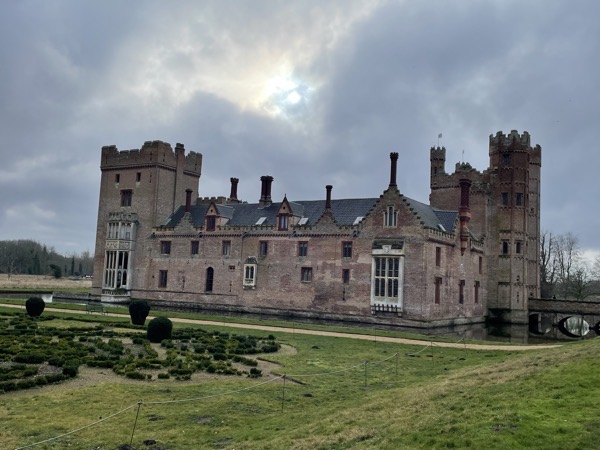
A bit of snow this morning
The view over the field at the back of our house this morning.

An online notebook
Get posts by weekly email:
An online notebook
The view over the field at the back of our house this morning.

Gavin Beckett – Harnessing the changing landscape of local government to create internet era organisations:
Effective responses to complex, long-standing social challenges need to be co-designed and co-produced with people and community organisations that grow from the ground up. Modern councils need new capabilities that enable them to work well with a constellation of partners, thinking about the network’s ability to create teams and services that wrap around the person and family, rather than assuming that the council must create top-down solutions themselves. They need to be effective conveners, brokers and collaborators in the ecosystem of the whole place.
Atika writes One Year On: Building Digital Momentum in Luton:
Twelve months ago, I stepped into the Director of Digital, Data and Technology role with a clear set of ambitions and a determination to help Luton Council move forward on its digital journey. Looking back, the transformation has been both challenging and rewarding—and, most importantly, it’s been a team effort.
Working with her has been great!
Paul Brown – Everything I Got Wrong About Product (So You Don’t Have To)
That’s when it hit me: the lessons I’d want my son to know are the same lessons I wish someone had told me — the ones that stop you wasting years pretending you know the future, chasing the wrong goals, or mistaking movement for progress.
(via Neilly Neil)
Nice story on the LOTI blog about adapting open source components in the Drupal system to make an AI-powered PDF scraper to help create more accessible HTML content on council websites.
Another one from the LOTI blog, this time it’s Rethinking how councils buy technology by Katy Beale:
Procurement isn’t just a list of features. It’s about user experience and has the opportunity to spark service transformation and design better public services.
Hear, hear.
Richard Pope – Preventative healthcare: designing for the service loop:

Katherine Wastell – Every organisation has some madness:
If everyone spots the problems but no one takes responsibility, things will only get worse. Accountability is the difference between taking a step forward and staying stuck. It takes one brave team to break the cycle.
Full of great insight (via Ben Unsworth).
Polly Mackenzie – Iconoplastic – a made up word for an important idea:
In other words, it’s not just bureaucracies that resist innovation. It’s innovation that resists bureaucracies. Proof if you need it: a few months ago I had the privilege of attending a conference on the government’s (great) Test Learn and Grow programme, designed to accelerate place-based public service reform. The word ‘Grow’ was missing from half the slides in the presentation.
(via Ben Unsworth)
Ross Ferguson – An appreciative review of the ‘refreshed’ Digital Strategy for Scotland:
What is good are the references to improving capability in the civil service and not just capacity. The focus is not just about technical skills, but maturity, confidence, and application of digital tooling and ways of working generally across the workforce. Shared approaches, targeted support, and leadership as well as delivery capabilities will all benefit the holistic approach that is needed.
“CivTech is a Scottish Government programme that brings the public, private and third sectors together to build things that make people’s lives better.”
(via Ross Ferguson)
Dafydd Singleton – User needs for data standards.
Dafydd Vaughan – The bridge to nowhere: Why your ‘Target Architecture’ won’t ever deliver:
I’ve lost count of the number of Technical Design Authority meetings I’ve sat in, watching smart people tie themselves in knots over a diagram. We’d debate whether a proposed change conformed to the “target architecture” – a utopian blueprint of a perfectly rationalised, fully integrated, and utterly fictional technology estate.
Ben Holliday – Analogue innovation (doing one thing well):
The art of making a product that does one thing well has arguably been lost. With so many modern devices, digital overwhelm is everywhere. It’s design without trade-offs. The constraints used to be that products had to focus on a single function or task, or were limited by computing power or what was possible with engineering.
Phil ‘The Rumenator’ Rumens – Sourcing the stack for local government technology:
…there’s a systemic contradiction that local government is fragmented by design, but given the state of the market, councils often make similar technology choices, then individually procure many of the same products from a small pool of vendors, and separately expend the time of their under-resourced teams managing their own local technology stack of those similar products.
Ben Thompson – The benefits of bubbles:
What goes up must come down, which is to say bubbles that inflate eventually pop, with the end result being a recession and lots of bankrupt companies. And, not to spoil the story, that will almost certainly happen to the AI bubble as well. What is important to keep in mind, however, is that that is not the end of the story, at least in the best case. Bubbles have real benefits.
(This reminds me again about how much I really want to be the Ben Thompson of local government IT. Just pay me to blog, someone! Please!)
Ash Mann – The discipline of focus, what makes a digital strategy work:
Good digital strategies aren’t long documents or laundry lists. They’re about ruthless focus – choosing a clear direction and sticking to it, even if that means letting go of attractive ideas.
(via Neilly)
Digital identity and the UK government’s announceability problem, by Richard Pope:
In the search for announcibility, tying it to the issue of immigration, and allowing the language of a singular ‘ID card’ to permeate, the government appeared to abandon the radical incrementalism and replace it with the sort of big bang tech announcement we all hoped were of the past. It also risked creating inertia for those teams in government who are already delivering. The inertia created by competing priorities, combined with a very particular, British, passive approach to calling out those contradictions, is toxic to delivery in the UK civil service.
I newslettered.
Lloyd nicely links to my newsletter but also points out the hideous URLs it produces for the web version. He’s right, but I am not sure what to do about it.
I’ve always been leery of the Jetpack plugin – for some reason I can’t remember – but this article has made me consider reconsidering.
Essex County Council has some excellent guidance around creating forms.
Set up a new council on localgov.blog today! Looking forward to seeing what they post.
Some useful links in Ben’s halloweeknote.
Created a little online community around Localise Live! last week, using Basecamp. It isn’t very glamorous or exciting, but I’ve not found anything better for communities of practice-esque online spaces.
I worry sometimes about the ownership of the company and some of their problematic views – but at the moment it doesn’t feel like they infect the platform in the way it does at, say, Substack.
Find and reuse digital service elements is a website put together by some folk at the Ministry of Justice that signposts the user to examples of publicly available guidance and patterns for digital work.
Am not entirely sure what I think about it. Obviously it’s a lovely thing to have done, and the world is no worse for it existing, but I’m not sure just how reusable some of these artefacts are in the real world. Certainly the tagline – “Building public services together – one reusable block at a time” – feels a bit of a stretch.
Rachel Coldicutt – There’s no such thing as a universal digital service:
In a world where Meta has more users than most countries have residents, it seems odd to say that digital services aren’t universal – but universal services need to work for everyone, not just for people who are digitally connected.
Martin Wright – Mapping is thinking:
We often treat maps as deliverables – neat, tidy artefacts to show what we’re building. But the value of mapping isn’t in the artefact; the value of mapping is in getting there. The process of making the map is what helps us think, collaborate and move a problem forwards.
Really good post this from Duncan Brown – Design by cliché:
But what “booking” means can vary wildly from service to service. Two thirds of breast screening appointments are administered via mobile vans. This is a different, and differently-complex, sense of “booking” from clinic-based appointments, and different in turn from “booking” a vaccination in a community pharmacy.
These “bookings” have little more in common than a name. And indeed that is exactly what teams at the Ministry of Justice found when they tried to standardise “bookings” for prisons.
I’ve done some thinking around this stuff and agree that saying things like “case management should be the same whether it’s adult social care or housing” is a bit daft. Likewise – bookings in my experience are often best developed using components at a layer of abstraction down – forms, payment, resource management, notifications, etc.
Words like booking, reporting, applying work well as service patterns, a layer of abstraction up from the technical gubbins. It’s still helpful to use them to help service designers and tech folk to speak a common language, but not so helpful for the techs putting together a platform of components.
Transforming public services for a modern Wales [PDF warning]:
If Wales wants to rise to the challenge of improving public services, we have to change how we design and deliver them.
That means putting people first, adopting modern and open ways of working, drawing on the best digital practices to build services that are simple, efficient, and designed around real life-needs.
Better tech won’t make joining the indieweb easier, but collectives could:
So how do we get more writers off centralised platforms and on to the indieweb? It’s not unsurprising that a tech audience thinks the answer lies in more, better or “easier” tech. But I think it requires a shift in perspective, away from an individualistic call for everyone to “skill up” and work out how to set up their own website. We need to think collectively, and pool resources. Those who can do all this need to help those who can’t.
Lloyd might be interested in this.
More great sharing from Emily Webber – Building Communities of Practice that Amplify the Flow of Learning Across Organisations:
Humans learn the need to connect with others early on; we are born without the ability to look after ourselves, so we need that connection to survive, and that need doesn’t go away throughout our lives.
However, many of our organisations follow hierarchical, siloed organisational charts that discourage people from connecting across them, often split into separate cost centres, budgets and targets. Going against our human nature to connect.
Sarah and Carl are taking up the reigns of LocalGovDigital – a Slack-based networks of digital practitioners in local government, and I’m stepping down.
I think they’ll do a great job and am really excited about what they will be able to achieve with the group – hopefully a lot more than I managed!
I linked to the recent Notify case study on LinkedIn, adding the commentary below. Saving here for posterity 🙂
Feels to me like this ought to be something easily adopted in local government. I did some digging into Notify uptake in local gov a year or so ago, and found that many councils use Notify for one or two things, but it was rarely considered a core component of digital service delivery. Why? Because sending SMS notifications isn’t part of many workflows. Often because it was seen as too expensive when looked at 10 or 15 years ago.
Encouraging councils to send more SMS notifications is the start, because leveraging Notify to do it is an absolute no-brainer.
(Am aware that Notify does more than SMS, but you hopefully get my point.)
James Plunkett writes Iterate, if you can:
Because linear mentalities have crept back in some places, it would be worth a big new push to restate the basic case for iterative and user-centred methods, and to insist on the associated operating model (e.g. mixed discipline teams). Clarity is key: assert the basic principles of iterative working, explain why it reduces risk and makes better use of public money, be insistent on the model, etc. Test & Learn might be the best framing/vehicle for this, but it will need strong support from the highest levels of government if contemporary management practices and operating models are to become non-negotiable.
I need to get better at remembering to hit the publish button on the daily note aggregation posts on here. I don’t want to automate it and like having some control, so maybe a calendar entry is the right way to go!
Nova Constable writes about accessibility and LocalGovDrupal on the Digital Luton blog.
This blog is hosted on localgov.blog – a WordPress instance I host to enable councils to operate ad-free blogs without having to suffer adverts or deal with the hosting issues themselves. Just let me know if you would like one for your council!
Lloyd reports not getting a pingback from me when I linked to his blog. Am not surprised the micropost didn’t ping, but the daily note aggregated version is just a standard post and should have done. Will take a look into it.
In 2015, UK government call centres received hundreds of millions of calls about its 7,000+ government services. One in four of these calls was a request for an update on an application or appointment. This drove up call volumes, increased hold times, and was often a source of negative interaction between the public and the government. Worse, they cost the government millions of pounds.
Could the UK government develop a method to deliver trustworthy, accessible information quickly and securely across fragmented industries? What strategies could they use to create universal adoption? And perhaps most challenging: who would pay for it in a government structured around departmental silos? In this case study, we explore how the UK’s Government Digital Service (GDS) addressed a government-wide challenge by developing a modular digital infrastructure, focusing on how the team evaluated and made key decisions around scaling and financing a cross-government service. In doing so, we highlight the strategic choices and pivotal moments that shaped its success.
I newslettered earlier.
i’ve been enjoying Lloyd’s recent ponderings about blogging.
I’m also really enjoying the way this blog works these days, posting little nuggets that can get pulled into a aggregated post on a daily basis (or when I remember to hit the switch). Each of these ‘microposts’ exists as a separate item in the database, so you could see them all in one place, or even subscribe to the RSS feed for them. Massive thanks again to Steph for making this magic work for me.
I am aware that it’s very link-heavy, and I don’t write much here other than pointing to other people’s stuff. I’d like to write more and reading Lloyd’s stuff has been encouraging!
All this is possible because of open platforms like WordPress and standards like RSS. I don’t really understand what the ‘fediverse’ is, really, but it strikes me that there are two simple things that people need: somewhere to write, and somewhere to read.
I wonder if thing that blogging lacks is what we get with a lot of the walled gardens, which is the that the reading and the writing is in the same place. People like me are happy finding one service to subscribe to blogs in, and another to write posts in. But should WordPress (say) have an inbuilt aggregator? After all, we don’t read and write emails in different apps.
This blog now has a ‘dark mode’ option – there should be a moon shaped button floating around somewhere on the screen that lets you toggle between the default, rather bright, style; and a much darker, easier on the eyes one.
Very easy to do thanks this WordPress plugin.
The Good Things Foundation have launched some learning materials around AI and LLMs that looks very useful for absolute beginners.
Not come across Digital and Data essentials for senior civil servants before, but it looks a sensible list, and one that could be easily adapted for local government use.
Perhaps as a Skillstats thing? 🤔
Our daughter Jade took a photo of me to start using on the internet – replacing the rather catfishy one where I have hair and look hopeful. Have spent part of the day updating various accounts and web pages with it.
Great stuff from Emily Webber on ice breakers.
A roadmap for successful AI adoption in Higher Education, from dxw:
Higher education institutions are actively experimenting with AI to improve operational efficiency, yet approaches vary significantly across the sector. Institutions face complex issues including output accuracy, data privacy, and academic integrity – with some organisations establishing centralized AI task forces while others maintain department-led initiatives that risk duplication and inconsistent policies.
Given this landscape, strategic engagement with AI requires drawing on experiences from across the sector and beyond. This is the first in a series of blog posts discussing the different aspects of AI implementation. Here we present two complementary frameworks – EVR’s 4D strategy and dxw’s iterative approach to grounded experimentation – that together provide a comprehensive roadmap for successful AI implementation in higher education.
Useful for any sector.
Via Neilly, Project vs Product Funding by Jennifer Pahlka:

Scott Colfer writes Most of What We Call a ‘Service’ Isn’t One (and Why That Matters for Product People)
In government and the wider public sector, we’ve built our identity around “services.”
Digital teams design them, measure them, apply the Service Standard to them.But most of what we call a service isn’t actually a service.
More often, the work we label as a “service” is really something else:
- An experience (like applying, enrolling, or updating).
- A capability (like payments, case management, or publishing).
- Or a technology system (like a website or platform).
The Service Standard itself, our flagship guidance, is rarely been applied to a true end-to-end service. Most of the time, it’s applied to fragments: experiences, capabilities, or tech.
And that mislabelling matters. You can end up treating a website like a whole service, or expecting a tech platform to deliver a citizen journey.
Interesting take: hands up people who’ve ever said “i cant wait for my local council to build an AI chatbot”
do residents actually want this?
wouldn’t they rather use their chosen AI – which already has access to and understands the internet, their preferences, their context? instead of our RAG bot that knows nothing about them and only works within our little bubble?
OpenReferralUK show and tell. I wrote on LinkedIn about it:
I genuinely believe there is a golden opportunity in the open referral stuff to use the service directory concept to flip the local public service operating model to matching people’s needs with those that can meet with – with local government getting out of the way.
Ouch: Europe’s largest city council delays fix to disastrous Oracle system once more:
Elected representatives of Birmingham City Council’s audit committee vented their frustration this week after hearing that the rollout of the IMS – designed to replace the council’s banking reconciliation system (BRS), which went so badly wrong after the April 2022 go-live of Oracle Fusion – is to be postponed again.
The council’s financial management has been unable to file auditable accounts since it replaced an aging – but functioning – SAP system with new cloud-based software from Oracle. Although the council had expected to implement the system out-of-the-box, it made customized modifications including the introduction of the BRS, which failed to function as planned. The council was declared effectively bankrupt in September 2023, because of the ERP disaster and outstanding equal pay claims. It is now working to reimplement Oracle from scratch and go live in April next year.
About bloody time: Europe’s cookie law messed up the internet. Brussels wants to fix it.
A podcast episode featuring Dave Winer on “Decentralisation, WordPress and Open Publishing”:
Today we’re talking about the vision, history, and future of the open web. Dave reminisces about the origins of today’s internet, the early days when idealism and collaboration were at the web’s core. He shares stories from his career, the rise and fall of early software startups, and how the initial spirit of community slowly gave way to the “walled gardens” of big tech giants like Facebook, Google, and Twitter.
Now this looks interesting! Telex Turns Everyone into a WordPress Block Developer:
Telex is an experimental tool from the Automattic AI team that turns natural-language prompts into working WordPress blocks. You simply describe what you want, and Telex generates the block.
Harry Metcalfe writes All policy constrains good action, as well as bad:
Like Shadow IT, pulling what’s currently done in the shadows into the light would teach us a lot about how teams work, what they need, and how we as organisations and leaders can enable them better.
And I imagine that there are people who are still working like this, blogging regularly, having creative conversations in the fediverse and using all of that learning and knowledge-sharing to create new things, have new thoughts and find people to collaborate IRL.
But many of the people around me have walked away from writing in public – I have too, it’s hard to write this post without second guessing the responses. But to not write in public feels like a really sad resignation and failure. It feels like letting the bad guys win, and since a lot of bad guys seem to be winning quite often these days, I’m still tempted to believe that there’s a responsibility to put away the closed platforms and only do things that are on the web and controlled by me and to help the people in my communities to do the same.
Richard Pope writes What the NHS Single Patient Record can learn from India’s Ayushman Bharat Digital Mission:
Part of India’s National Health Authority, the Ayushman Bharat Digital Mission was founded in 2021 to design, build, operate and scale digital public infrastructure for India’s health system. Among the products and platforms it is responsible for are the Unified Health Interface, which provides open protocols for linking medical records, making bookings and managing consent; and the ABHA App which lets patients maintain a copy of their health records, access services and manage consent.
Building understanding of software markets in local government from the Local Digital team:
We’ve also identified through roundtable discussions and feedback from partners that managing effective procurements and successfully exiting technology contracts is a challenge, particularly where internal capacity or capability is limited.
With local government reorganisation, new unitary authorities will need to consolidate systems, migrate data, and harmonise business processes at an unprecedented scale. This will also impact technology contracts and procurement activities.
Foundational Specification to support the procurement of social care Case Management Systems:
The Department of Health and Social Care has released a Foundational Specification to support the procurement of social care Case Management Systems (CMSs). Developed in partnership with BetterGov, the Specification is the outcome of a multi-stage consultation process involving a wide range of stakeholders. Its primary aim is to simplify the procurement journey for Local Authorities by providing a clear and consistent guide—helping to reduce the time, cost, and resources required when selecting new CMSs.
Endel – via Matt Mullenweg – is an interesting idea, offering “[p]ersonalized soundscapes to help you focus, relax, and sleep. Backed by neuroscience.”
I definitely work better when I have the right music playing – but £60 is too steep when i already have Apple Music and a bunch of suitable playlists identified.
Tewkesbury have published their new digital strategy, which I had a bit of input into.
Why WordPress Lost the Cool Kids (And How to Win Them Back):
Here’s what nobody talks about: WordPress is actually modern. REST API, GraphQL, headless implementations, React-based editing. It powers complex applications and handles millions of visitors. But everyone still thinks it’s “just for blogs.”
The platform regularly outperforms competitors on speed, but gets labeled as “slow and bloated.” Enterprise teams at Sony and Microsoft chose WordPress deliberately—these aren’t legacy installations.
WordPress has Full Site Editing and visual builders that compete with Webflow. They just feel hidden behind confusing historical interfaces.
Another newsletter sent. Am pleased to be getting back into a fortnightly rhythm.
Some delivery issues though, need to have a look at my DNS records to ensure I have them set correctly.
If you’d like to sign up, you can do so!
It isn’t altogether obvious how to send an email to the attendees of an upcoming Zoom meeting, without exporting their details and sending a normal email, which seems sub-optimal.
This is the content of the ‘article’ element of the email newsletter I sent last week. Publishing here for posterity.
Giles Turnbull: The strategy is enquiry
What I’m suggesting is a new approach for the times when there’s a perceived need for a document called a “strategy”. It shouldn’t be a document full of “we will”; it should be a website full of “what we’re learning”.
Use it to demonstrate your institutional capability to test and learn, to enquire and be curious.
Key learnings from GOV.UK One Login discovery research for local government:
Key themes emerging from the research include:
- cost savings are essential – councils told us this would be critical to secure leadership buy-in
- identity verification is a USP – councils value secure verification and the potential to share credentials across local and central government
- suppliers are open to integration – many are already using, or moving towards, OpenID Connect (OIDC) compatibility
- forward thinking but stretched – councils want to future-proof systems, but limited resources, capability, and competing priorities are barriers
- user adoption risks – concerns about digital exclusion, resident trust, and the transitioning of users to a new system
Dave Winer, It’s really simple:
FeedLand is the perfect back-end for a twitter-like system, for the feeds part. And for the words, the perfect back-end is WordPress. I only discovered that about 1.5 years ago. And I had to see what it looks like. No more tiny little text boxes, it’s a real editor that supports all the features of the web. How do I know? Because it saves its data in Markdown. That has come to be the defining format for the text-based web. One which has been totally ignored by the twitter-like systems. How could they miss that? Markdown is like MP3. If you’re mixing sound into feeds you use MP3 of course. It’s there for you to use. As was Markdown. If you’re mixing text you’re mixing Markdown.
Really Simple Licensing – “The open content licensing standard for the AI-first Internet”.
RSL is an open standard that lets publishers define machine-readable licensing terms for their content, including attribution, pay per crawl, and pay per inference compensation.
Avoiding the hidden costs of leadership debt – Oli Lovell, Public Digital:
Technical debt is well recognised. But the same logic of ever-shifting organisational needs – and therefore the debt accrued by standing still – applies to leadership too. As a leader, your skills, models and culture operate as a system of their own, determining how well your organisation is able to adapt and respond to change.
Decision making at the right level with Hats, Haircuts and Tattoos by Emily Webber:
What I like about these definitions is that they provide a framework for considering a decision, while also allowing for the differences and nuances of the situation and the experience of the people making them.
i know its a lot easier to book the same recurring slot every fortnight / month
but its quite depressing seeing group after group you never get to attend, because they always meet on your non working day 😔
I did the lazy thing with Localise Live! but probably should have mixed it up a bit more. I will be making recordings available to people who sign up, so maybe I need to make it clearer that people should sign up even if they can’t make the meetings, so they get that access…
David Gerrard – UK government productivity not enhanced by Copilot AI
The main uses were “transcribing or summarising a meeting”, “writing an email”, and “summarising written communications”.
The bot didn’t do so well on anything more complicated. Users could churn out PowerPoint slides faster, but worse. Excel data analysis was slower, and worse.
How Tim Cook sold out Steve Jobs by Anil Dash:
There’s a tech industry habit of second-guessing “what would Steve Jobs have done” ever since he passed away, and most of the things people attribute to him seem like guesses about a guy who was very hard to predict and often inconsistent. But recently, we have one of those very rare cases where we know exactly what Steve Jobs would not have done. Tim Cook and Apple’s leadership team have sold out the very American opportunity that made Steve Jobs’ life and accomplishments possible, while betraying his famously contemptuous attitude towards bullshit institutions.
James Plunkett writes What does digital-era healthcare really mean?
When the UK government published its 10 Year Plan for Health two months ago, there was general support for its direction of travel: shifting from analogue to digital, from hospitals to communities, and from treatment to prevention.
The question people asked is whether the healthcare system has the capability to deliver these shifts. Or, put more bluntly, ‘we’ve heard this all before, so why is this time different?’
The hidden fundamentals of digital transformation in healthcare: how to roll out nationally in a local system – by Jane Maber on the dxw blog:
There’s no question that the technical challenge is real. Designing digital services that work for a national screening programme in a local environment isn’t easy. You have to integrate with diverse existing systems, handle local variation and consider patient safety. Not to mention managing, and often decommissioning, legacy systems alongside.
But what’s become increasingly clear is that technology alone doesn’t drive transformation. As more decision-making power is devolved to Integrated Care Boards (ICBs), national teams can’t assume one-size-fits-all delivery. Success is really all about the people impacted by the new product – the admin and clinical staff who use it, and the screening participants who experience it.
Change doesn’t land just because it’s technically sound. Or even operationally sound for that matter. It lands because people trust it, understand it, and feel part of it. So development needs to be done in partnership, and the quality of the relationship with those partners is critical.
I stopped sending out my email newsletter this year – it lost its place on my todo list in the madness of moving house and so on.
However, am minded to kick it off again, but wanted to move away from Substack for a variety of reasons including nazi-friendliness and increasingly user hostile behaviour.
So, taking some advice Steph gave me a while ago, I’ve moved to Email Octopus, who seem very friendly and the system is easy enough to use. I’ve also changed it to be Localise branded – I’m terrible about marketing my company so thought this might be an easy way of reminding people how I earn a living.
If you’re curious, you can sign up on the landing page.
Have updated my about page which was very long in the tooth!

Join me for a light-hearted hour of sharing challenges, ideas, and experience about innovating in local public services.
Localise Live! takes place on the last Thursday of every month at 12pm until 1pm and is open to public sector people only. The sessions take place on Zoom, so make sure you have it downloaded and up to date!
Don’t worry if you can’t make them all, just sign up and pop along when you can.
Some sessions will have a predetermined topic to discuss, which you will be emailed about, and others will feature guests to share their ideas and knowledge with us. Sometimes we will just busk it on the day!
Sign up now to bag your place and get all the sessions added to your calendar: https://bit.ly/localiselive
See you there! 😀
Brent’s Innovation Journey: Building a ‘Base’ for Local Government Innovation by Ryan Hamilton on the LOTI blog:
At Brent, we’ve been trying to rethink how we tackle problems in a way that makes ‘innovation’ not just a buzzword, but a practical, everyday reality in local government.
That journey led us to something exciting: We will soon be launching ‘The Base’ , a dedicated space at the Civic Centre (both physical and cultural) where bold ideas, agile working and collaborative experimentation come to life.
What makes a good outcome? by Jamie Arnold:
In the world of digital and organisational change, being able to define and communicate a strong outcome is a leadership superpower. Whether you’re working on a product, service, or internal shift, a well-crafted outcome sets direction, aligns teams, and builds momentum. Here’s how to make your outcomes truly effective.
New book to improve accessibility of Welsh digital public services – from the Centre for Digital Public Services.
The Wildlife Trust’s work-in-progress digital transformation maturity scale. Really good stuff and fabulous sharing by Alice Kershaw on LinkedIn.
I like the idea of “digital everywhere” – amongst a whole range of brilliant ideas and reflections from Catherine Howe:
Digital everywhere: The embedding of digital practitioners within services alongside a digital skills development program is something I feel we’ve tested in a limited way but clearly it works when done right and I’m really looking forward to having the capacity to develop this approach. This requires a really strong approach to making sure those digital roles are properly designed and also wired into the core digital team as well as clear guide rails that need to be context sensitive.
Product strategy, prioritisation frameworks and responding to change by Alan Wright:
Product teams often face more opportunities than they can act on, with new ones arising all the time. This post explores the link between strategy and priorities, when prioritisation frameworks help or hinder, and how to empower teams to make smart, timely decisions as new opportunities emerge.
From Strategy to Strolls: A Few Weeks of Progress and Pauses, by Atika:
One of the standout achievements in the last few weeks was securing approval for our new strategic framework and governance model. This marks a significant step forward in aligning our digital ambitions with the Council’s broader priorities. The framework, shaped through collaboration and challenge, is now the backbone of how we’ll deliver impact—anchored in transparency, agility, and accountability. We’re also making good progress on the TOM work to make sure we have the culture and capability to deliver this.
The courage to digitally transform with the Digital Layer and AI – interesting talk from Mark Thompson.