No time for notes yesterday, was interviewing all day. So impressed by the calibre of people wanting to work in digital and tech roles in local government. The sector has a bright future if it keeps investing in people like this.
Super interesting discussion about content moderation and specifically Substack. The use of internet platformsto spread hate speech is a problem as old as the internet, but it’s clearly not good enough for those stewarding platforms to stand back. The ‘Nazi bar’ analogy is new to me but it’s a good one I think.
Had the misery of watching most of Forest v Man Utd yesterday afternoon. The centre of midfield seemed completely absent for most of the game, I am really not sure what Danilo and Freuler bring to the party. Surridge came on up front and didn’t really demonstrate he is up to Premier League quality. It all felt a bit random – perhaps due to the injuries and size of the squad. But I think, especially given Bournemouth’s good form, we have to be likely relegation candidates unless something remarkable happens.
I do wonder how much the double @ sign in Mastodon addresses puts people off. I know it does me. How can you trust something where such a key element is so ugly?
This is a(nother) thing I am trying to get back into the habit of blogging regularly, recording and reflecting.
I’m using Obsidian as a text editor for these notes. It has a connector to WordPress which means I can publish them at the end of the day with a single click. Having an offline space to be typing into seems to make it easier to leave things unpolished
I attended OneTeamLocalGov for the first time this morning. Nearly 30 folk there I think, some interesting things discussed – lots around training and skills, as well as re-using tech in councils (so difficult!) and making change happen
I have read 20 books this year so far, not bad going. Mostly thriller type things and historical fiction (Sharpe, etc). But also some history and literary stuff. Currently on the first Falco novel by Lindsey Davis. Not sure it’s for me.
I found the discussion between Tom Holland and Paul Kingsnorth pretty gripping. I enjoy the former’s work on The Rest is History podcast hugely, although I find his books a little too broad-brush for my liking. Kingsnorth I am endlessly fascinated by.
The Local Digital and Cyber teams are going to be making some exciting changes over the next few months, backed by multi-year funding to the tune of £85 million.
We’re developing an enhanced approach that will allow us to support the local government sector to achieve even more brilliant things, as well as fix the core problems.
Read on to find out about our plans, how we got here, and what this means for local government.
We know that not all projects move from alpha to private beta. But there’s an expectation that it’s the next logical step… then to public beta, then live.
So, when we realised our project wouldn’t make it out of alpha, it felt a bit sad. Almost like something had gone wrong.
We won’t be the only team who find themselves in this situation and we wanted to share what we have learned and more importantly, how it’s actually been a positive thing.
The vast majority of commentary about the Musk-Twitter saga has focused on the first three paragraphs: what does Musk mean by making Twitter more free speech oriented? Why doesn’t Musk believe he can work with the current board and management? Does Musk have the cash available to buy Twitter, and would the Twitter board accept his offer (no on the latter, but more on this below)?
The most interesting question of all, though, is the last paragraph: what potential does Musk see, and could he unlock it? For my part, not only do I agree the potential is vast, but I do think Musk could unlock it — and that itself has implications for the preceding paragraphs.
Thanks to the mistrust of big tech, the creation of better tools for developers, and the weird and wonderful creativity of ordinary people, we’re seeing an incredibly unlikely comeback: the web is thriving again.
In your Slack workspace, you can work with your team, connect software tools and services, keep up to date with announcements and find the information you need to do your best work. Managed without care, it does have the potential to be distracting – and even a source of stress. It can affect productivity and mental wellbeing.
But there are ways your organisation’s leaders, Slack administrators and team can use Slack to minimise distraction and ease stress levels to help your team make the most of their working day. In this post, I’ll talk you through some helpful strategies.
This is a handy feature, hidden away in Chrome, that I was very pleased to discover the other day. Basically it’s a way to create a screenshot of an entire webpage, and not just the bit that is currently visible, without the need to install any extensions or whatnot.
It might be that this feature isn’t accessible to you at work, as it uses the developer tools menu, which some places switch off for their users to stop them having too much fun. Sorry about that.
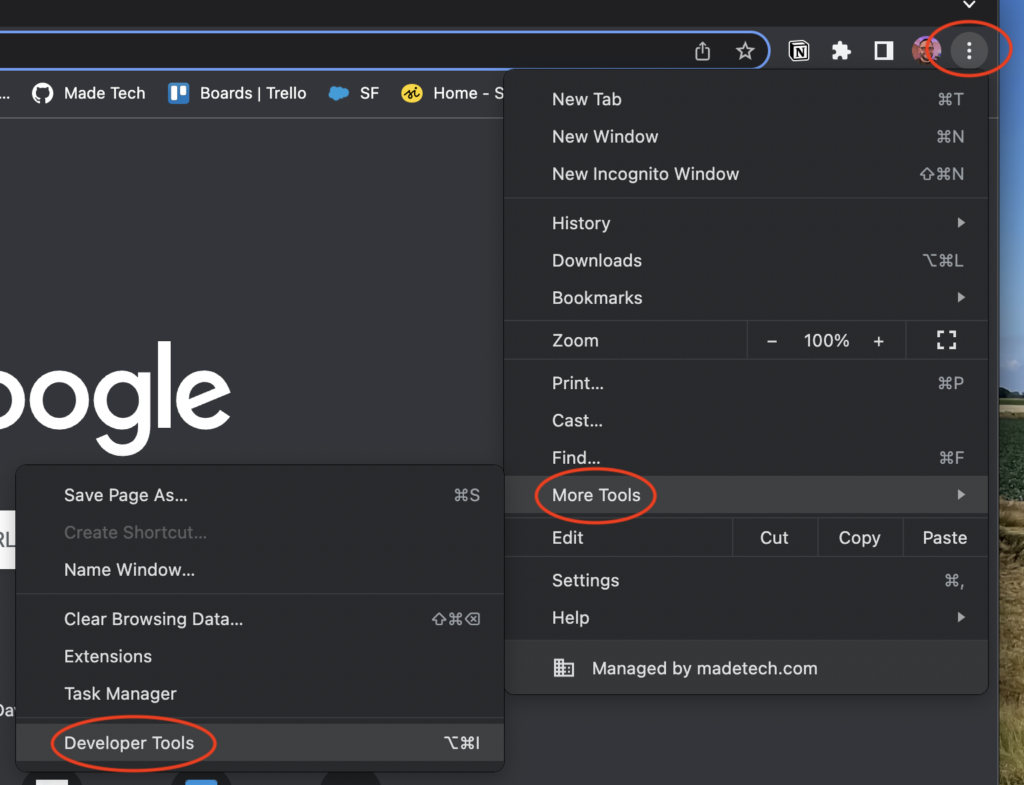
First click the three dots that are usually found on the top right of the browser window to bring up a bunch of extra options. Find More Tools and click that, and then click Developer Tools on the next menu that pops up.
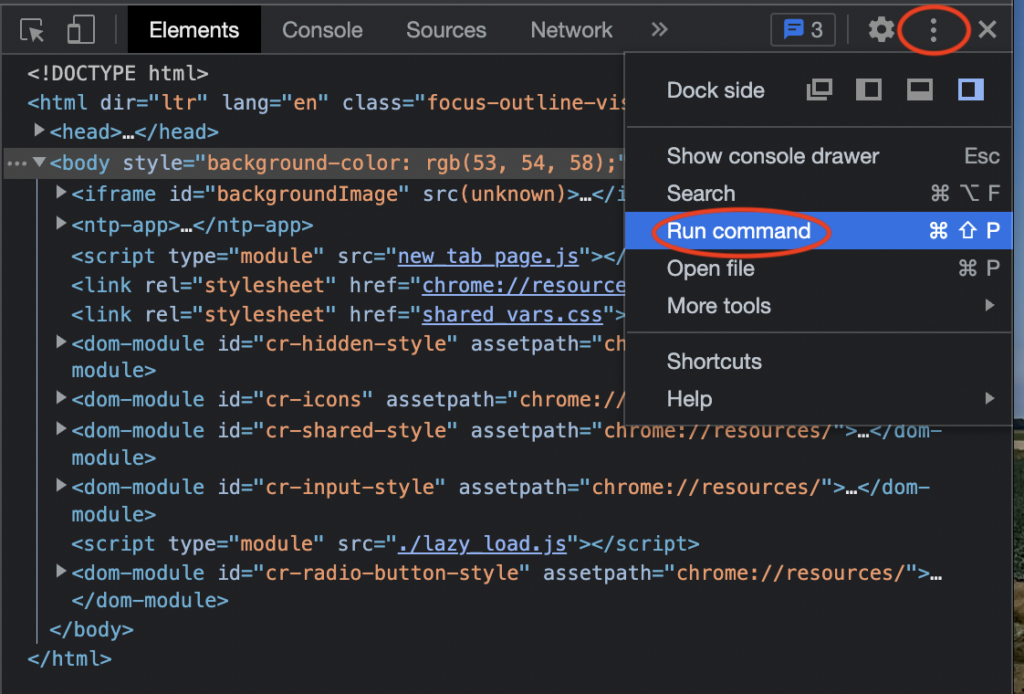
The developer tools console will then pop up on the right hand side of your browser (usually). Hit the three dots on that, and then choose Run command.
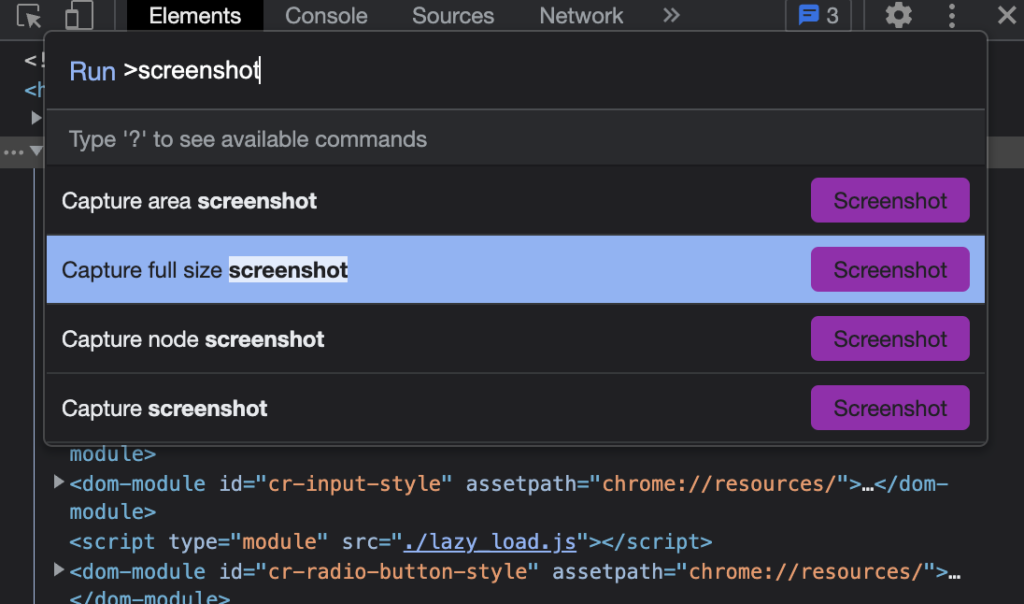
Type the word screenshot and a list of related commands appears. Click Capture full size screenshot.
Doing so should instantly download a png of whatever tab you were viewing when you ran the command.
It might seem convoluted at first, but I definitely prefer it to faffing about with extensions and so on.
This week brings to a close my two and a half years as Head of the Local Digital Collaboration Unit (LDCU). In this blog post, I want to reflect back on the lessons learnt and achievements, such as bringing local authorities together to solve common challenges, and in particular how a group of local authorities and suppliers are cooperating together to deliver an open source solution.
Revenue and Benefits systems are one of the key digital systems for all local authorities, processing payments to and from local businesses, council tax payers and hundreds of low income households on a weekly basis. They hold key customer data and, as such, are a linchpin in delivering councils’ digital transformation strategies and should link seamlessly into other key council systems.
You would expect that transformation of these systems would be at the forefront of every council’s mind. And they are, but because there are limited options (3 main suppliers in the market), there is a level of dissatisfaction with the market and transformation is considered to be costly and risky. Only 2 LAs in the country have their own in house Revs and Bens systems and Sedgemoor are one such council.
It’s always great to receive recognition for the hard work our team is doing. At the beginning of March we were delighted to win the Gold award for Customer Focus at the iESE Public Sector Transformation awards… Our entry focused on two areas of Cumbria Council – Highways Enquiries and Fault Reporting and Targeted Short Breaks for SEND Children.
I have competed my first 3-day design sprint to build a prototype digital playbook. I wasn’t quite sure what to expect – so while a little hectic, sometimes intense – all in all it was a great experience and I am becoming more used to feeling comfortable with the uncomfortable! Below for the record sets out what we did, how we went about it and what we discovered.
What is servant leadership, and how can you use it to help your teams fly? Clare Sudbery talks to Katy Armstrong about how to empower teams to do their absolute best work, by removing blockers, identifying vision and giving them everything they need.
I began my journey as a BA half a decade ago, and here I am today: a lead BA at Made Tech. I love being able to make a difference to a very diverse mix of users of public sector systems, which has ranged from Home Office frontline users to clinicians in the NHS, as well as the general public. Learning about the different systems and processes involved goes hand in hand with this, so I’m constantly learning and developing my skill set. But there’s much more to the job than this. Here’s the lowdown on what we do, what makes a good BA, and how we contribute to success.
If you work in digital in the public sector, you’re probably aware of accelerated delivery. It helps to build projects faster, more efficiently, and with reduced risk.
If your team is new to delivery at pace, we’ve outlined 10 questions to ask yourself and your team to make sure you’re set up for success.
This blog has existed in one form or another for a very long time – since September 2004 in fact. It’s a bit of a hotch-potch of content, because as well as the posts I have been making regularly on here in the form of a personal blog, I also have imported into it the archives of various others sites I have maintained in the past, whether for work or other projects.
Over this time it has had many guises, names and URLs, but has been settled at da.vebrig.gs/ and on WordPress.com for a fair few years.
However, I have this week migrated the whole archive of my blog to a self hosted WordPress instance. This is because I want to merge the content from the SensibleTech website into this one, and some of the content requires some customisation that isn’t possible on WP.com without shelling out more cash than I would like to.
It shouldn’t look too different at the moment, as I have stuck with the same theme and only tweaked the odd display setting.
The next job is to import the link library, which is made up of a customer post type, custom taxonomies and some custom theme code to make it work. That will probably be a long job, so don’t hold your breath!
The phrase DDAT – standing for digital, design and technology – has become a commonly adopted bit of industry jargon in government circles, to describe the work that people do in this thing we call digital.
However, I find it just doesn’t quite work for me, and I think it is because of the use of the word digital within it. I think in the definition, digital is meant to cover things like user centredness, service design, digital culture and so on – but this isn’t terribly clear.
So, I have found myself on occasion instead referring to digital: design, data and technology. I’ve never abbreviated it, but I suppose that if I did it would be D:DDAT.
For me, D:DDAT gets across the idea that ‘digital’ encompasses the use of design, data and technology rather than being separate from the latter two.
This hardly matters in the grand scheme of things, but I thought it worth sharing! 🤷♂️
The Local Digital and Cyber teams are going to be making some exciting changes over the next few months, backed by multi-year funding to the tune of £85 million.
We’re developing an enhanced approach that will allow us to support the local government sector to achieve even more brilliant things, as well as fix the core problems.
Today we have announced our ambitious new Digital Strategy. It aims to provide residents, businesses and partners with an overview of our digital ambitions for the borough, based on three broad pillars: Digital Communities, Digital Place and Digital Council.
The Tacit community of practice kick-off canvas helps get your community started or reset using a canvas framework that guides you through six questions… It has been available for a couple of years on my company website as a printable pdf, and I have recently turned it into a Miro board template, which anyone can use.
Despite politicians’ grand ambitions for DDaT since at least 1996, it’s had relatively little impact on radical government renewal and reform. Yet the political ambition has remained fairly constant during these 26 years: to ensure users are the focus, not providers; to design services more closely around people’s needs and lives; and to deliver more effective, and higher quality public services.
These two quick lateral thinking icebreaker games will help participants flex their creative thinking muscles before jumping into your workshops. I love that they help get people checked into the session and open up new ways of thinking, particularly good if you want creativity in your workshop.
While companies large and small have made considerable gains in building a scalable and sustainable architecture, we’re left with the uncomfortable questions: is what we’re doing truly providing value? Do we really know who our users are and understand their needs? If so, can they generate insights in a fast and reliable way? As long as users don’t complain and pipelines don’t fail, does that mean all is well? For all our investment in data, are we seeing the return?
As we enter this new phase, I am keen that we now move away from being seen as just an IT provider to the rest of the council to one where we can start to work more collaboratively in partnership with our service leads so that we prioritise, manage our demand, design and shape and build great digital services together; a place where we cultivate and nurture an environment of working in the open; grow our digital talent and become centres of excellence of good practice across our various digital and technology disciplines.
Today we’re sharing the first of our new user research templates and guides. We designed these for teams working within the council, and they can easily be adapted for teams working in other councils. You’ll find these on GitHub. Download them, make them your own, and let us know if we can make them even better.
Am really chuffed to be a part of this project, funded by the team at DLUHC, to see how portable the in-house developed revenues and benefits system from Sedgemoor council is. We will also be looking at the licensing and governance model for making the system potentially open source – potentially a revolutionary move.
What’s also nice is that the project needed a home for its blog, and in an, er, semi-professional capacity, I was able to knock something up on LocalGov Blogs, along with the free version of the Blocksy theme.
As always when I run into WordPress issues, Steph Gray is on hand to help me. Thanks buddy!
For what it’s worth, my instinct is that the NHS might be the place that leads (by doing) the settler phase over the next 10-years. Showing by doing. The work of the last 2-years during the pandemic, the recent restructuring, and some conversations with people leading this work all make it sound like they’re explicitly investing in the work of the settler phase. Looking closer to my old home, the Office of the Public Guardian is doing this at a smaller scale.
In 2017, I was asked to ‘make digital happen’ at the council. Digital is such a broad agenda and needs to permeate everything we do and think about in the organisation. Although the ICT function in the council initiated ‘digital’, I didn’t want technology to be the focus of the change activity.
Two opportunities presented themselves in different service areas when we were about to experiment with service design. We engaged FutureGov, who worked alongside service leads, ICT business analysts, content designers and application support officers, exposing them to user-centred design and working in multi-disciplinary teams.
I’m always looking out for good examples of teams working in the open, and this WRA team are doing everything right. If you want to write good weeknotes about a digital project, just do what this team are doing, and you’ll be doing a great a job.
The important thing to pass on from our experience is that change doesn’t happen overnight. Patience and conviction of cause will help solve one problem at a time. You need to forge alliances and earn trust that will help change to happen.
Today is International Women’s Day. So, we asked a few of the women working in technology at Made Tech to share insights about equality and working in the industry, including how they’d change the tech industry for the better. Here’s what they said…
Eddie Copeland off of LOTI and I recorded a bunch of videos just after Christmas, aimed at senior-ish folk in councils who want to get up to speed on all things digital, data and technology.
I’m really pleased to be able to say that since last week, I have been working at Made Tech!
For the last decade or so I have been working with local government to modernise the way things get done: from early experiments with social media, to improving the user experience on websites, to getting to grips with the back office IT and all that entails.
Sometimes I have worked directly in councils, in Head of Service roles at places like Adur & Worthing or Croydon; sometimes as an interim, such as at Horsham or Reading. Just recently I have been a freelance consultant, working across a number of local authorities.
What I haven’t done before is work for a company that can support public sector change and modernisation at scale. Being a freelancer is all well and good, but there was only ever one of me and my own skill set has its limitations.
Joining Made Tech gives me the opportunity to keep talking to local government about how it can make best use of digital design, data and technology; only with the backing of an incredibly strong team of designers and technologists to actually make things happen.
What’s more, the cultural fit with the company is a perfect one. The commitment to capability building by sharing knowledge and experience and up-skilling client teams really speaks to me.
There are a whole bunch of people I have known and respected for a long time at Made Tech. Getting to spend time with Glen, Lorna, David, Matt, Emma, and others is going to be a fab experience. The new people I am meeting are also an incredible lot, and I am really excited about what we can make happen together.
I need to figure out what I am going to do with the SensibleTech website in the future, but for now it’ll stay where it is and the content won’t be disappearing. I dare say, though, that I will be blogging a bit more here than previously, as well as appearing now and then on more official channels.
If anyone in my network is interested in how Made Tech could help them make things better, please do get in touch.
The workshop that Lizzie and I delivered went down pretty well, I think. You can find out for yourself by watching it back.
It’s a quick canter through different methods of undertaking user research, aimed at those new to the whole idea. I think user research is a super-important thing for digital teams to get involved with as quickly as possible, because it’s a cultural game changer. If you want to be more user-centric in your work, there’s no better way of doing it than actually speaking to, and understanding, your users.
One of the elements of the Loosemore definition of digital that doesn’t get as much coverage as the rest is the bit about business, or operating, models. That’s probably because it’s really hard.
I think it is fair to say that this really is just the start of this conversation, but I really hope that folk can take inspiration from what Eddie shares in terms of thinking about how certain services could be completely transformed from the ground up.
As I explained in this post, it isn’t always going to be possible to be truly transformative, and sometimes less ambitious approaches are more suitable. But I think every council needs to have this kind of thinking in their lockers, ready to take the opportunities as they arise.
User research is one of the most important stages of any successful digital project. However it often gets missed, and that’s often because people just aren’t used to doing it.
Involving service users in research and testing is a big cultural change for organisations, and takes a fair bit of confidence to start doing for the first time.
In this workshop, Lizzie Bruce from Cake Consultancy joins me to introduce common user research methods, as well as some less well known ones.
We will also talk through how to arrange user research sessions for the first time – where to host them, how to recruit users, how to record sessions and turn them into actionable insights.
At the end of the workshop you will feel more confident about:
Including user research activities as part of your digital project
Choosing the best user research methods to meet your objectives
Setting up your user research sessions, in terms of location, equipment and practicalities
Following on from the workshop I ran with LGiU last week on digital for leaders (which went very well, thank you for asking), I shared a few bits with the delegates – further reading, if you will.
Part of that was a set of videos on YouTube that cover some of the important areas that folk in senior positions really need to understand, delivered by people with far greater expertise than me.
Here they are – try and get them in front of your senior leadership team, if you can, and book in a chat with them shortly afterwards to help them apply it to your organisational context!
1. Digital Government: Not Complicated, Just Hard – Tom Loosemore
2. Applying digital to everything – Janet Hughes
3. Situation Normal, Everything Must Change – Simon Wardley
4. Human-Centered Data Transformation – Kit Collingwood
5. Designing government services that meet user needs – Martin Jordan
For any digital transformation effort to be a success, it needs to have a organisation that is open to change to work with.
This is often a bit of a stumbling block, because even if you have an amazing digital team and a kick-ass programme in place, if the people across the organisation don’t understand what you’re on about, then you’re in trouble.
This is why one of the projects you need to initiate early on is a digital capability programme. This should provide just enough digital knowledge, understanding and – most important – confidence in the people you work with to keep things running smoothly.
There are a few different ways to approach this. Here’s some of the things I have found work well – you can pick and choose and adapt as you see fit!
Build your leaders’ digital confidence
There is no getting around the fact that you must have the buy in from senior people in your organisation. In fact, buy in doesn’t really cut it – they need to own this thing. Oftentimes leaders -whether they be politicians or senior management types – need a regular reminder of what really matters when it comes to digital and what they need to do to support this.
What I have found is that a one-off workshop is great for getting some excitement and momentum, but it’s really, really easy for that to dissipate if you don’t follow it up. I’d recommend getting workshops booked in for every other month with your most senior management team, if you can.
Another idea is to put in place a form of one to one coaching for senior people. Often they might not be willing to confess to not knowing things within a group context, so providing a safe space where they can perhaps be a little more vulnerable might be a good idea. It also helps foster your own relationship with them and builds trust, and gives you the chance to help them take a long term view of their need for understanding and commitment to the digital cause.
Digital champions or advocates
Building a network of enthusiastic and knowledgeable digital people across your organisation can be an incredibly useful way to spread goodwill about your efforts in departments other than your own. It’s really important though to avoid ‘milk monitor syndrome’ in creating yet another opportunity for people to volunteer for something nobody wants to do. One way to do this is to maybe avoid titles like ‘champions’ and instead go for something newer sounding – I like ‘advocates’.
One key thing is to engage with the already-enthused. Any network or community of practice like this will die a death if people feel they are forced to be there. Find those hidden, motivated digital enthusiasts who want to be a part of something and will make change happen because they want to.
Some of the things you can do to make your advocates network something people might actually want to join:
Run face to face events as well as online networking to build trust in the network
Make things available to your advocate network that other’s don’t get – whether early access to new digital services, learning and development opportunities or even just a sticker for their laptop
Organise an excursion – maybe to visit another similar organisation to yours to see how they do things, or perhaps to a digital company in another sector
Big thanks to the digital doers community for their help in sharing what has worked for them building these internal enthusiast networks.
10 things you need to know
This is something I have been banging on about for a while, and I have seen it – or similar – done really well in a couple of places. To me there is a basic amount of knowledge that you would want everybody in the organisation to know about digital and transformation. Not the specifics on how to use certain products or services, or even how to run agile ceremonies or user research, but instead focusing on the big picture things people really need to understand to ‘get’ what you are trying to achieve.
This could be delivered in a number of ways, but I like the scalability of an e-learning course, one that could be pitched to anyone in the organisation, from the CEO to front line workers. It should give everyone the core knowledge they need, so you can move quickly when working with other service areas.
Internal blogging or newsletter
Working in the open makes things better, we know this. However sometimes we can work more openly internally, to let people know what we are up to. It’s a great way to spread your cultural tentacles, whether in the form of a regular newsletter or an internal blog. It helps you ‘show the thing’ to a wider audience than can attend show and tells, for instance, and can bring your weeknotes to more people’s attention.
You might worry that people won’t be interested but my experience is that people are way more interested than you assume they are – and if you can add some character and humour to your comms, that will help a lot too.
Come along for the ride
A final idea is to get people from other departments involved in the work you are doing even if they wouldn’t ordinarily be a part of the project. Digital volunteering, in other words. Say you have someone who you’d like to expose to agile delivery methods – why not invite them to play a role on the team, attend the ceremonies, and deliver some of the work. There is no better way of learning this stuff than by doing it and being surrounded by others doing it, and creating a way for people to get experience of it before being involved in a project they are truly responsible for is a great approach.
The importance of inclusion
I can’t finish this article without flagging up the importance of taking an inclusive approach to your capability building. People’s backgrounds can have a huge impact on how they engage with change and new ways of looking at work, and it’s important to ensure that whatever training, workshops or other learning activity you put in place acknowledge this and are built around the needs of those engaging with it. Take the time to understand the people you are going to be working with, and demonstrate that digital doesn’t just mean churning out cookie-cutter experiences using technology.
In other words, your capability programme should be a great exemplar of user centred design itself!
Here’s the recording of the workshop I ran this morning which looked at using a simple template to find out more about the service we are looking to digital redesign.
We used the example of reporting fly tipping, as well as having a general chat towards the end about how best to engage with service managers when embarking on transformation work.