Tuesday, 18 May, 2010

The home of GovCamp

Over the past few years, a number of events have happened which could loosely be described as ‘GovCamps’ – taking the barcamp idea of open space style ‘unconferences’ and governmentising it a bit.

Starting with Jeremy’s efforts in 2008, we have since seen two subsequent national level govcamps, and several local versions, in Birmingham, Lincoln, London and Cheltenham.

The next one takes place in York on 12th June – find out more here.

It’s always occurred to me that the GovCamps are something that public sector folk in the UK could really be proud of – proof that a decent number of people are interested in improving things, and that they aren’t afraid to give up their Saturday to do it.

So how to best shout about this activity? Best thing to do is build a website. We had a Ning network – but that was very much dominated by the national, January event, and had a stupid domain name (ukgovweb.org – will be closing at the end of the week) which didn’t come close to describing what it was all about.

So, I had a quick play with WordPress and BuddyPress and produced UKGovCamp.com – a simple social site where people can find out about the GovCamps, see which ones are happening and which are being plotted.

Go and take a look, and get involved! I’ve even written up a 10 point plan for running your own event.

#The home of GovCamp

Monday, 17 May, 2010

Face your online fears

Silver Surfers' DaySilver Surfers’ Day is coming up on the 21st May. Organised by Digital Unite and supported by UK online centres, among others, it’s a national campaign to highlight the opportunities the internet offers people in later life.

As a part of this year’s event, UK online centres are running a special campaign for people to face their online fears, after research reveals that fear is a major blocker to older people making the most of the net.

They say:

If you know someone who is not online why not support the ‘Face your online fears’ campaign and help them to overcome their worries about using the internet. There are ‘Face your online fears’ events happening at 700 UK online centres across England or why not help them to get started at home with our free ‘Face your online fears’ game which will give them an understanding of how to use a keyboard and mouse, online security, and even online shopping. It’s really easy and they could even win a laptop. To find a centre running an event or play the game visit: www.ukonlinecentres.com/faceyouronlinefears

As well as the online game, accessible from anywhere, 700 uk online centres will be supporting Silver Surfers’ Day and Face Your Online Fears.

Pass it on.

#Face your online fears

Sunday, 16 May, 2010

Why I’m NOT quitting Facebook

FacebookThere’s been a lot of talk recently about Facebook and their privacy issues, as well as their perceived attempts to ‘take over the web’ through their ‘like’ buttons and other integrations with their platform.

As a result, quite a few commentators and influential social media types have announced that they are leaving Facebook, deleting their accounts and removing all the content – which isn’t that easy to do, it turns out.

I’m in no position to criticise what other people do, so I’m not going to – but I’m not going to leave Facebook. I’m not saying the privacy and other stuff isn’t important – it is. The Facebook privacy settings are a usability nightmare, but I do encourage everyone to take a look at theirs and lock them down however tightly you want. Below are my reasons why I’m not quitting:

1. It’s where an awful lot of people are

Facebook is where I connect online with less geeky family and friends. As some of you may have heard, my dad’s on Facebook. He isn’t on Twitter, or any of the other less-known platforms. Likewise with a lot of my friends for whom the internet isn’t the be-all and end-all of their lives (yes, such people do exist). If I stopped using Facebook, I’d stop seeing what these people are up to, their photos and other stuff. For me, that’s a bad thing.

2. My life is already all over the internet

Even if I wanted to, I can’t turn back now. I dread to think what information about me is already online, even taking Facebook out of the equation. If I decided to leave Facebook for that reason, then surely I would then, logically, have to track down all that information that is in other places. I simply cannot summon up the energy to do this. I made a decision a few years back that I was going to use the web to build a career and live my life. I can’t now complain that people I don’t know can find stuff out about me.

3. Attempts to control the internet always fail

Look what happened to AOL. If Facebook really thinks it can control the content people see and the way they see it on the web, they’re mad, and they’ll end up becoming irrelevant. I don’t really care that Facebook are trying to spread their platform wherever they like: let them. If it ends up being a case of giving up too much control for benefit accrued, people won’t engage with it and it will die.

4. My job means I need to use and understand Facebook

This is the killer for me, to be honest. A lot of the customers I work with want to use Facebook – it’s where people are, after all. How can I effectively advise them if I don’t know how the latest Facebook technology works, because I’m not using it myself? FIne I can read about stuff in blogs and whatnot, but nothing replaces the learning you get from playing with things yourself. So, professionally, I have to stay engaged with what remains one of the biggest and most influential social computing sites in the world.

Are you quitting Facebook, or sticking with it? I would be interested in hearing other people’s views!

#Why I’m NOT quitting Facebook

Saturday, 15 May, 2010

Friday, 14 May, 2010

Bookmarks for April 30th through May 14th

I find this stuff so that you don’t have to.

  • Should the Public Sector pay for Content Management Systems? « Carl’s Notepad – [with open source] "You will still need to consider the integration aspects but open source products are far more likely to integrate (openness is key) then the big supplier products (no motivation to integrate)."
  • Office 2010: the SharePoint factor – "The simple conclusion then is that to make sense of Office 2010 you need SharePoint 2010. The snag is that SharePoint is not something to roll out casually. Although it has a huge number of interesting features, it is also complex and easy to break. "
  • No Overall Control – a Future State of ICT – "To really address the gap between people in ICT and people who work in the Business (people outside of ICT) you actually need to start moving the competencies that IT Professionals have into the Business."
  • The Fate of the Semantic Web – "While many survey participants noted that current and emerging technologies are being leveraged toward positive web evolution in regard to linking data, there was no consensus on the technical mechanisms and human actions that might lead to the next wave of improvements – nor how extensive the changes might be."
  • tecosystems » I Love WordPress But… – "the reasons we self-host our WordPress instances are being eliminated at an accelerating rate"
  • Meatball Wiki – "Meatball is a community of active practitioners striving to teach each other how to organize people using online tools."
  • Amazon Pursues The Feds and the Potential Billions in Cloud Computing Services – ReadWriteCloud – "Amazon is quietly pursuing the multi-billion dollar federal cloud computing market, intensifying an already fast accelerating sales and marketing effort by Google, Microsoft and a host of others."
  • What’s Wrong With CSS – "Most of all, what I've learned from this exercise in site theming is that CSS is kind of painful. I fully support CSS as a (mostly) functional user interface Model-View-Controller. But even if you have extreme HTML hygiene and Austrian levels of discipline, CSS has some serious limitations in practice."
  • WordPress-to-lead for Salesforce CRM – "People can enter a contact form on your site, and the lead goes straight into Salesforce CRM: no more copy pasting lead info, no more missing leads: each and every one of them is in Salesforce.com for you to follow up."
  • A Collection of 50+ Enterprise 2.0 Case Studies and Examples – Nice resource. Some great examples in here.
  • Headshift Projects: Projects by Sector – Nice collection of social software case studies.

You can find all my bookmarks on Delicious. There is also even more stuff on my shared Google Reader page.

You can also see all the videos I think are worth watching at my video scrapbook.

#Bookmarks for April 30th through May 14th

Sunday, 9 May, 2010

Instruments of torture

Nicely put by Gerry McGovern:

Over the years I have been struck by how awfully designed internal systems are. Most internal tools I come across are more like instruments of torture than the drivers of efficiency they are supposed to be. What is even more shocking is that nobody in management cares. There is an almost total lack of leadership.

#Instruments of torture

Thursday, 6 May, 2010

Wednesday, 5 May, 2010

Using social media in learning

A question was asked in the social media community of practice (various levels of authentication required) about using web 2.0 technology to support learning. I couldn’t help myself…

Blogging

Using blogs to record and share learning is a really nice use of technolog. Blogging is great for writing stories and sharing experience, especially when everyone in an organisation can access and search the information on a blog. Fundamentally blogs are just really easy ways of getting content online, but the personal nature of them also helps individuals write about their own knowledge and learning. Get people to blog about a recent learning experience they have had, or about tips and tricks that they have come across in their work that others could make use of.

Forums

One of the things we have come across at Learning Pool when it comes to e-learning is that when people can talk to others about something, it tends to stick in their minds much better than when they just read about it. So our e-learning management system provides forums along with courses so that those studying that lessons can ask questions of the rest of the learning community, discuss the content and work together on problems. Forums can also be used to support face to face training and learning activity too – enabling people to talk to each other about what they learned in the classroom afterwards, helping to make that learning stick in their heads, and to clear up any confusions people might have walked away with!

Wikis

Blogs are good for people to record their personal learning experiences, and forums for having conversations about learning, but what about building collections of resources for people to refer to, and add to, over time? For that you need a more traditionally structured website, but one which lots of people can contribute to. That’s where wikis come in. Any kind of useful web resource, where large groups of people can contribute material, is great for a wiki. Rather than handing out loads of sheets of paper during a training session, why not put them all up on a wiki for people to access online? That way everyone always gets the latest version, and if there’s is something that needs correcting or updating, someone from the community can do it for you. Alternatively, wikis are great for building online dictionaries or jargon busters, for example.

Twitter

It might be considered a distraction to have people sat in a training sessions fiddling away with their phones, but actually having people recording and sharing what they are finding out is a great way to learn! It’s just like taking notes with paper, only everyone can re-use it. If you use a common hashtag with your training, everything that has been tweeted during the sessions can be drawn together in one place and everyone can benefit from it. Even better, by using a public platform like Twitter, you can get people not present in the training giving their input too, adding to the mix of ideas.

Media sharing

A great way for people to consolidate learning is to record training sessions and let them watch, or listen to them again later on. It’s simple enough to record a video of a talky bit of training using a Flip or Kodak video camera and then share it either publicly on the web or on an intranet, say. Alternatively, audio podcasts might be easier to do and share. Other resources can be shared online too, whether presentations using a public site like Slideshareor other documents and learning materials on Scribd. By sharing this stuff publicly, others can take what you have done and add bits and improve it in places and everyone can benefit. To see an example of this, check out this fantastic resource from the Scottish Government Library Services.

Social bookmarking

Sites like Delicious, which let you store links to useful web pages and sites on a public webpage are a great way for a group of learners to share the great stuff they find online. Once you get into the habit of bookmarking interesting articles using a social bookmarking tool, it becomes a quick and easy way to build up huge knowledge bases of related content. Using tagging to build up your own vocabulary of key words to describe content makes bringing together resources on a similar topic really fast too.

Social networks

Using social network type features, as seen on Facebook and others, is a really useful way of combining a lot of the activity above with a great method of further sharing people’s knowledge, talents and interests. Social networks tend to feature Twitter-like status updates, discussion boards and media sharing (but generally not wikis, sadly). What they also have is user profiles which are great ways for people in an organisation to share details of what they know about, what they do, what they are interested in and where there talents lie. So much more useful than the traditional ‘yellow pages’ style staff directories! So if you need some expertise on an issue, someone to lead a training session maybe, if you have an internal social network you could search and find the ideal person.

#Using social media in learning

Monday, 3 May, 2010

Using a PC

I’ve had a pretty settled tech line-up for a while, which works really well for me. Essentially – 24” iMac on the desktop, MacBook Air for the portable and an iPhone for the really portable.

The iMac is fine for the grunt work, sitting at the desk ploughing through pretty much anything – with 4gb RAM and a 3.06ghz Core 2 Duo crunching through video doesn’t present too many problems (though I am at times tempted to up the RAM to the full 8gb).

The Air is not a performance machine, but it handles the web ok as well as basic stuff like Word, and is light enough to lug about and use on trains etc without too much bother. The battery life on it is disappointing, I only get between 2.5 and 3 hours out of a full charge. It’s limited to 2gb RAM, which isn’t that much these days, and things can slow down when you have a lot going on – Flash content can be a problem.

Some stuff you need Windows for, so on the iMac I have a virtual Windows XP machine, which I tend to use for testing stuff in Internet Explorer 6 and the odd bit of Office work which, for whatever reason, Office on the Mac can’t handle (sometimes it does very odd things with formatting).

This setup has done me proud, and with the brilliant Dropbox providing the glue that keeps all these machines stuck together, it’s been easy to work on stuff whichever device I’m using.

Sadly though, my Air has had to go into the Apple shop for repairs – the iSight webcam stopped working, and that means the whole screen-half of the machine needs replacing, and it will be gone for a week at least.

This left me laptopless, which given that I am out of my office a few days a week, would cause some major productivity problems. Luckily team Learning Pool came to the rescue and kitted me out with a new laptop.

It has Windows on it.

To be precise, Windows 7 running on a Dell Vostro v13. It’s a lightweight portable laptop, a step above a netbook, but no workhorse machine. My model has 2gb RAM and a 1.3ghz Celeron processor – plenty for web browsing, emailing and Office stuff, but not a machine you’d want to do any video editing on, for example. Also, if you have too many apps open at once things do slow down quite  bit. In other words, it’s a bit like the Air.

Like the Air, it’s also a lovely looking thing, thin and light and perfect to carry around a lot. I’m finding Windows 7 a real improvement on Vista, but it still takes too long to boot up, shut down and wake up after going to sleep.

The battery life on the Vostro is as awful as it is on the Air, if perhaps a little worse. 2.5 hours seems to be the best it can do. Carrying a power lead will be necessary.

Most of what this review on Engadget says is about right, I think. What I have found I miss most from the Air – apart from all my favourite apps (see below) – is the trackpad. Using multitouch has just become second nature to me, and as I tend to do a lot of scrolling – in Google Reader, for example, or on general web browsing – having to constantly switch between trackpad and cursor keys is incredibly annoying and counter-intuitive.

In terms of software, the Learning Pool guys installed Office for me, and Skype, which is handy to have. Of course, with the Windows version of Office I get Outlook and I’m giving it a go (we use Google to handle our email and calendar at Learning Pool, and it seems to play pretty nicely with Outlook. On the Mac, I stick to the web interfaces). It’s not as bad as I thought it would be.

Bits of software I have added include my favourite RSS aggregator, FeedDemon which is superb, especially with the Google Reader synchronisation. NetNewsWire, the Mac equivalent, has nowhere near the richness of features sported by FeedDemon.

I installed Dropbox, so all the files I have shared using my other machines are now available on this one too.

I found that Live Writer was preinstalled, which is cool as it is a neat offline blog editor (I’m using it to write this post) and probably better than any of the Mac options.

I need an FTP client, and for that I downloaded FileZilla, a free open source cross-platform application that seems to work nicely enough, but doesn’t have the great usability of Transmit, which I use on the Mac. Any suggestions for a better app are welcome.

I’m using Notepad++ at the moment as a text editor, which is useful enough but I am yet to find a genuine equivalent to the likes of TextMate or BBedit on the Mac. If anyone has a recommendation, do let me know.

For Twitter, I installed the native Windows app by Seesmic, so as to avoid having to install Adobe Air, which can be a bit resource intensive on these less well-powered machines. I didn’t like it though, so also installed Air and Tweetdeck. Paint.net is a good little free image editor, and I downloaded Chrome for a browser – I couldn’t contemplate using IE, and I find Firefox is a bit slow and bloated these days.

Windows 7 comes with something called the ‘Snipping Tool’ which may replace Skitch on the Mac – if not then there is always the likes of SnagIt. The way Windows handles archive files like .zip seems really slow, and doesn’t match the speed that OSX seems to handle these things. I suppose something like WinZip would solve this.

Generally I would say Windows 7 is pretty good, probably the best version I’ve ever used, but it doesn’t come close to the ease of use of OSX. The system is often a bit sluggish to react and sometimes it isn’t terribly obvious to know what to do to accomplish certain tasks.

#Using a PC

Sunday, 2 May, 2010

Internet megalomania

John Naughton is spot on about the recent Facebook announcements in his Observer column:

What’s comical about this stuff is not so much its implicit arrogance – the assumption that we all want to share using Facebook – as its historical naivety. The history of the web is littered with the whitened bones of enterprises that once dreamed of total control. So until the cure for megalomania is invented, the only known antidote is a mantra. Repeat after me: the net is bigger than any single enterprise. And nobody owns it.

Well worth reading in full.

#Internet megalomania

Saturday, 1 May, 2010

Some recent reading

As well as blogs, tweets and reports that are published online, I spend quite a bit of time reading books too. They are often great for the bigger picture stuff which requires a bit of thought and chewing over.

Here’s a list of some of the stuff I’ve been reading recently – I’ve marked them as either DT (dead tree, ie a real paper book) or K (meaning I have it on my Kindle). It’s all in no particular order.

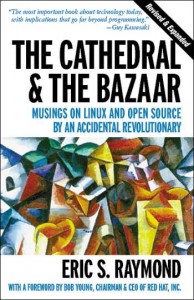
The Kindle has really changed the way I read techy books. I now won’t buy a work related book in paper form unless I have to – they just seem to suit the Kindle really well. I won’t switch to the Kindle for novels just yet, I don’t think, but for some reason the digital form suits non-fiction rather well.

(Disclaimer – where I have linked to Amazon, I have used associate links, meaning I get a few pence if you buy the book via the link. All the money I make from these goes towards the running of Palimpsest, a book group forum I host.)

#Some recent reading

Friday, 30 April, 2010

Bookmarks for April 25th through April 30th

I find this stuff so that you don’t have to.

You can find all my bookmarks on Delicious. There is also even more stuff on my shared Google Reader page.

You can also see all the videos I think are worth watching at my video scrapbook.

#Bookmarks for April 25th through April 30th

Wednesday, 28 April, 2010

Productivity, responsiveness and lighter weight

I rather like this, from Gartner’s Mark McDonald:

While the future will require IT to deliver enterprise specific strategies and initiatives there are a few considerations to keep mind:

#Productivity, responsiveness and lighter weight

Tuesday, 27 April, 2010

Project managers’ localgovcamp today

The latest in the seemingly unstoppable movement of localgovcamps is happening today, in Cheltenham. It’s subject specific, and is going to be all about project management and that sort of thing.

Great work by the team at Cheltenham Borough Council in throwing this together: Jon Hyde, David Wenban and Fiona Legge, amongst others.

Learning Pool is proud to be sponsoring the event, and you can follow all the action on Twitter via the ppmlgc tag.

#Project managers’ localgovcamp today

Sunday, 25 April, 2010

Net2 Cambridge

NetsquaredI had a lovely time on Saturday at Barcamb, a techie unconference in Cambridge. Quite a bit techier, actually, than I’m used to – but that offered a different perspective on things, which was rather nice.

It also meant catching up with some friends, like Mark Cheverton, Matt Wood and Simon Jones – and bumping into new people, like Barcamb organisers Vero Pepperell and Lee Theobold and cool hacker types like Gareth Rushgrove.

Another one of those new people was Claire Sale, who works for NetSquared, the rather cool US-based organisation that “enables social benefit organisations to leverage the tools of the social web”. That makes her a colleague of the marvellously energetic Amy Sample Ward, which is a jolly good thing.

One of the things Amy has been doing in London is setting up a NetSquared network, where “Social changemakers and technological forerunners come together at Net Tuesday events to mix, swap stories and ideas, [and] build new relationships”. Claire is hoping to get something similar going in Cambridge.

There is already a Meetup page setup, where people interested in attending, and maybe helping out, can get together and get stuff done. I’m guessing this will take a similar form to the London group – let’s just get people in a room together first, and then worry about what we should be doing.

Net2Camb seems a decent tag to apply to blog stuff, tweets and other online material to track activity and conversations.

#Net2 Cambridge

Saturday, 24 April, 2010

Jos Creese new Socitm President

Hampshire County Council’s Head of IT Jos Creese is the President of Socitm for the next 12 months, and if this quote is anything to go by, he seems an ideal man for the job:

IT professionals must carve out a role as agents of change, helping to re-shape the face of public services. This means involvement in policy formulation and service redesign, not technology. It also means taking risks and being at the forefront of change, rather than keeping busy in the data centre.

As reported on UKauthorITy.com.

#Jos Creese new Socitm President

Friday, 23 April, 2010

Bookmarks for April 19th through April 23rd

I find this stuff so that you don’t have to.

  • Open innovation, why bother? – 100% Open – "…if open innovation is to deliver sustainable business advantage then we need a better understanding of what motivates contributors to these initiatives, else there is a risk of a backlash against them…"
  • Docs.com – MS Office + Facebook beats Google Docs? Am not convinced!
  • TALKI – The easiest way to embed a forum – Embed a forum on your website – just like that! Users can sign in with Facebook, Twitter or Google accounts.
  • Government 2.0 Can and Must Save Money – "I think that the current shortage of resources and a sometimes dramatic budgetary situation can be a powerful incentive to make this change happen, to tap into the creativity of employees as well as external resources." YES!!!
  • Red Sweater Blog – Apple Downloads – VERY interesting – is Apple going to go down the App Store route for vetting Mac software now, too?
  • HTML5 presentation – "Slideshow-style presentation on HTML5 made using HTML5."
  • CDC Provides a Great Example of What Social Media Is About – "CDC’s strategy puts them in a better position to identify patterns where trust may be shifting elsewhere early enough to take action: many other agencies worldwide, which just care about publishing data and creating their Facebook pages, will be taken by surprise."
  • data.lincoln.gov.uk (beta) – Lincoln City Council start publishing data publicly – great work, and props to Andrew Beeken who must have driven this through.
  • Simplifying the social web with XAuth – "We think that XAuth can simplify and improve the social web, while keeping your private information safe. This is just one of many steps that Google is taking, along with others in the industry, to make the social web easier and more personalized."
  • Open Government and the Future of Public Sector IT – Great talk from Microsoft's Dave Coplin.

You can find all my bookmarks on Delicious. There is also even more stuff on my shared Google Reader page.

You can also see all the videos I think are worth watching at my video scrapbook.

#Bookmarks for April 19th through April 23rd

DavePress podcast 2 – Andrew Beeken

In the second DavePress podcast I chat to Andrew Beeken of the City of Lincoln Council about the new open data site he has just launched, data.lincoln.gov.uk.

[audio:http://media.libsyn.com/media/davepress/DavePressEp2.mp3]

If you can’t, or don’t want to, use the flash player, you can download the .mp3 instead or subscribe with iTunes.

If you have any feedback – or volunteer to be a participant in a podcast, please do so in the comments below, or emailpodcast@davepress.net.

For those that want to know, here’s how the podcast is produced.

#DavePress podcast 2 – Andrew Beeken